
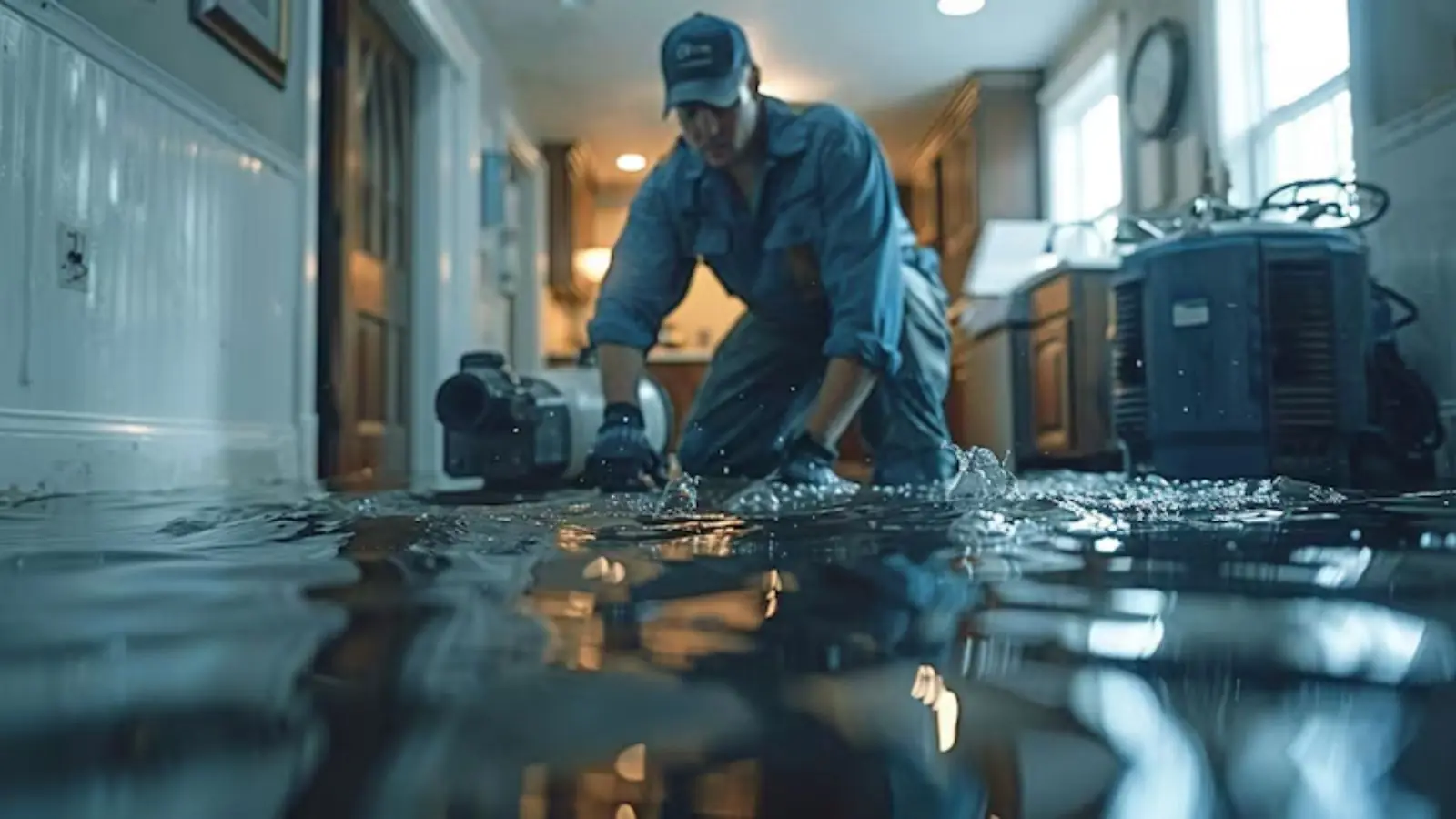
Water mitigation is the work done in the first hours and days after a water loss to stop the damage from growing. It means stopping the source, removing standing water and starting to dry the structure. It's the stage that decides whether you end up with a drying job or a rebuilding job.
This guide stays on that first stage. If you want the definitions of every term across the whole process, that's a different question. Here we cover the first 24 to 72 hours, the equipment, the monitoring and the limits of what mitigation does.
What water mitigation includes
Mitigation is a short list of urgent tasks. Each one exists to keep wet materials from getting wetter or staying wet longer.
- Stopping or isolating the water source, often with help from a plumber
- Safety checks around electrical panels, outlets and contaminated water
- Extraction of standing water with portable or truck-mounted extraction units
- Moisture mapping to find where water went
- Removal of materials that can't be dried in place, such as soaked insulation or carpet pad
- Setting drying equipment and monitoring it each day
Mitigation does not rebuild anything. Think of it as stabilizing the patient, not finishing the surgery. Once the structure is dry, a separate scope covers drywall, paint and flooring, and it should be priced and explained on its own. When you need an urgent crew, our emergency water removal page covers how standing water is handled.
If you need a crew at night or on a weekend, (626) 879-0276 reaches 24/7 dispatch. Describe where the water came from, whether it is clean or from a drain, and whether the main valve is closed.
What you can do before the crew arrives
Your first hour sets up the whole job. Closing the main valve stops new water, and keeping people and pets out of any water that might be contaminated protects everyone. Lift small furniture, pull up rugs you can safely move and prop up upholstered pieces on foil or plastic.
Photograph and film the damage before moving much. Open interior doors and cabinet doors under sinks so air can reach hidden spaces. Leave the heavy lifting, tear-out and equipment to the crew, and don't run a household vacuum on water. Keep a short log of what you did and when, since your insurer may ask.
Water in the house right now? Our dispatch line is open 24/7.
☎ Call (626) 879-0276The first 24 to 72 hours, step by step
Timing drives everything. The table below shows how the early window usually unfolds, though every loss varies with the source, the materials and the size of the affected area.
| Window | What happens | Why it matters |
|---|---|---|
| First hour or two | You shut off the water, stay clear of electrical hazards and call for help | Every minute of running water adds more wet material |
| First day | Extraction, moisture mapping, removal of unsalvageable materials | Standing water and soaked porous items are the biggest sources of moisture |
| Day one to day three | Air movers and dehumidifiers run, with readings taken daily | Drying works only if conditions in the room stay controlled |
| Each day after | Equipment is adjusted and moved based on new readings | Wet spots that haven't dropped need a different approach |
The EPA says that drying wet or damp materials within 24 to 48 hours usually prevents mold growth. That's why the early window gets so much attention.
The equipment that does the work
A professional setup uses tools that a hardware store doesn't stock, and each has a specific job.
- Truck-mounted and portable extraction units pull out standing water far faster than a wet vac.
- Air movers push air across wet surfaces so moisture can evaporate.
- LGR dehumidifiers pull that evaporated moisture out of the air so it doesn't settle on other surfaces.
- Moisture meters measure how wet drywall, wood and subfloors actually are.
- Thermal imaging cameras reveal temperature differences that often point to hidden wet areas behind walls.
Air movers and dehumidifiers work as a pair. Fans without dehumidification just move humid air around the house.
Moisture mapping and the drying plan
Before equipment goes down, a technician walks the affected area with a moisture meter and a thermal imaging camera. The goal is a map of what's wet, how wet, and where water traveled. Water often moves under baseboards and into wall cavities, so the visible stain is rarely the whole story.
That map sets the drying plan: how many air movers, how many dehumidifiers, which materials stay and which go. ANSI/IICRC S500 is the published standard for water damage restoration, with Classes 1 to 4 describing how much material is wet. Ask any company whether its crews work to S500 and how they decide equipment placement.
How mitigation limits mold risk
Mold needs moisture to grow. Remove the moisture quickly and you remove the condition mold depends on. That's the logic behind the EPA's guidance that drying within 24 to 48 hours of a leak or spill usually prevents mold growth.
Mitigation isn't mold remediation, though. If mold has already appeared, testing and remediation follow the ANSI/IICRC S520 standard, and any health questions belong with a physician. Our mold remediation page explains that separate process.
What mitigation is not
Mitigation doesn't fix the pipe. A plumber does that. It doesn't replace drywall, flooring or paint, because that's repair and rebuilding. And it isn't waterproofing, which addresses groundwater and drainage and is a separate trade.
It also doesn't end on a set day. Mitigation is finished when moisture readings in the affected materials meet the dry standard, not when a certain number of days have passed. Ask for the scope and the price to be explained before work starts, and for the daily readings in writing.
Water Mitigation in Temple City
Our office is at 9123 Las Tunas Drive, on the main commercial corridor that anchors Temple City's original townsite grid. Dispatch runs 24 hours a day, but where an office sits doesn't tell you when a crew will reach you. Call as soon as the water is stopped, because the EPA's 24 to 48 hour drying window is short. Ask any company how its process works before you decide.
Temple City covers about four square miles, so most of it is a short drive from neighboring cities. If you live along the edges, you may also compare options for water damage restoration in San Gabriel or water damage restoration in Rosemead, which border Temple City. The first-stage steps are the same no matter which side of the line your house is on.
Frequently asked questions
Drying is a large part of it, but mitigation also includes stopping the source, extraction, moisture mapping and removing unsalvageable materials. It ends when the structure meets the dry standard, and rebuilding comes after.
As soon as the source is stopped. The EPA notes that drying wet materials within 24 to 48 hours usually prevents mold growth, so waiting a few days for a convenient appointment works against you.
That helps a little with a tiny spill but not with a real loss. Fans move air without removing moisture from it, and wet wall cavities and subfloors stay wet. Dehumidifiers and daily moisture readings are what finish the job.
Sudden and accidental water damage is often covered, and many policies expect you to limit further damage. Check your policy and ask your insurer. Keep the moisture readings and the written scope for your records.
Dispatch is open 24/7, so night calls are normal. Before you call, shut off the main valve, stay away from wet electrical areas and photograph the damage if it's safe. We'll explain the scope and price before work starts.
Questions about your home? Talk to the 24/7 dispatch line.
☎ Call (626) 879-0276