
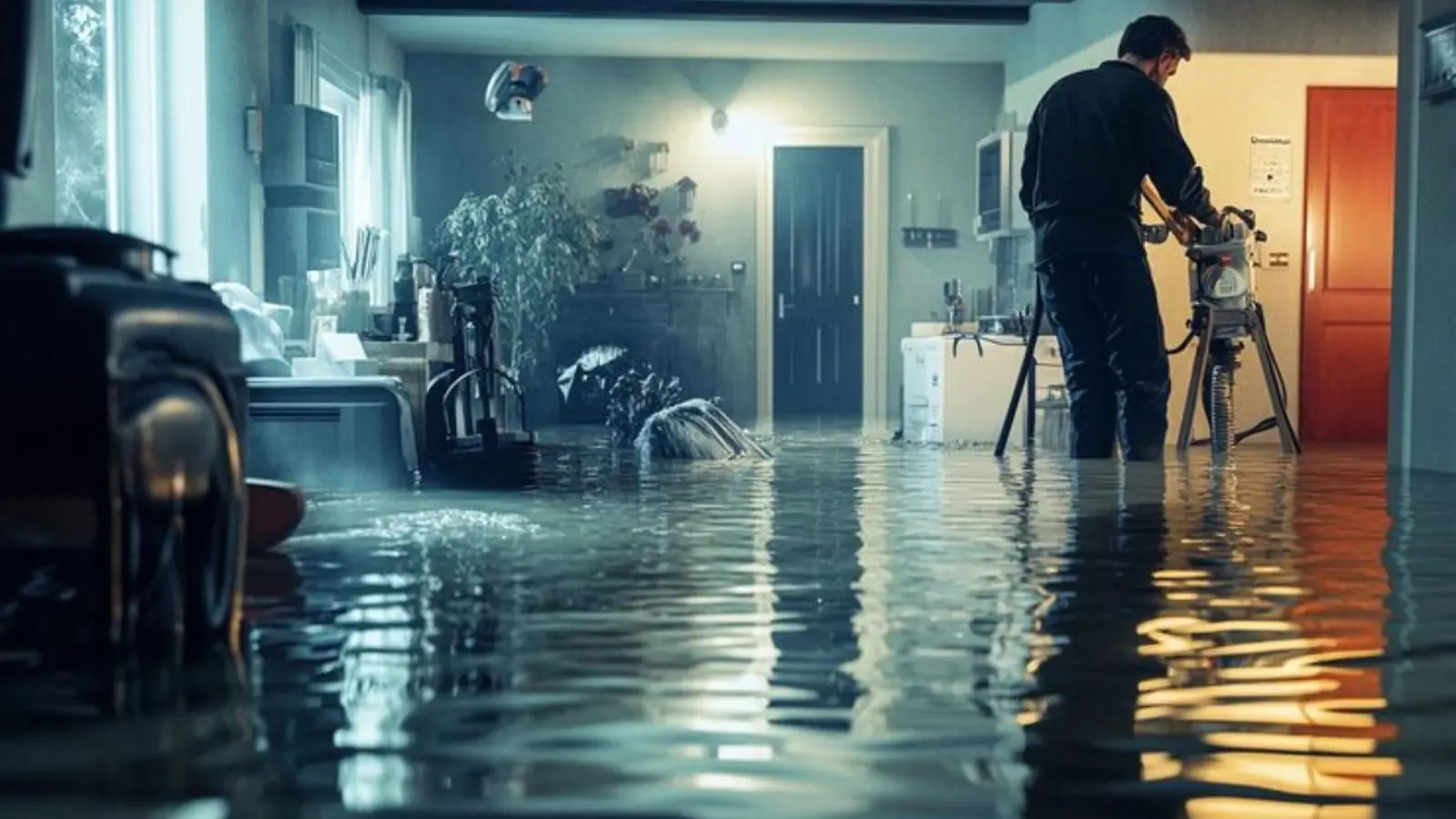
Water is moving through your home right now, so the next few hours matter more than the next week. We take calls 24/7. While you wait, close the main water valve, stop the source if you can see it, lift valuables off wet floors, and keep people and pets out of water that may be contaminated. Cut power to wet areas only if you can reach the panel dry.
Water mitigation is the work of stopping further damage before any rebuilding starts. It means finding the wet materials, removing standing water, and setting up drying equipment to the ANSI/IICRC S500 standard. This page covers the first 24 to 72 hours in Temple City, CA, from shut-off to moisture mapping.
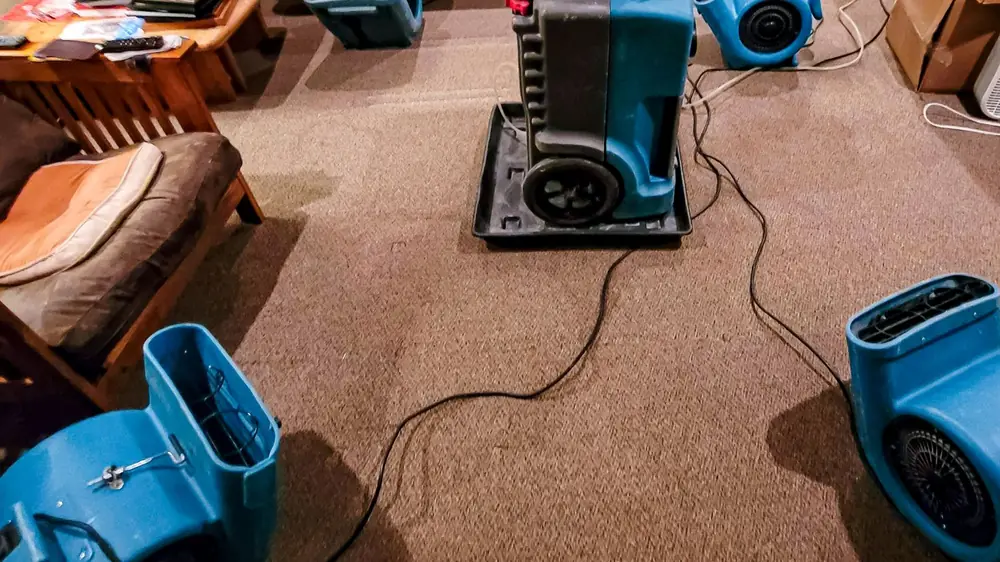
My Wall Is Soaked and the Carpet Still Won't Dry. What Now?
A wall that feels damp days after the leak stopped, or carpet that stays cool and heavy under a box fan, usually means water is trapped in the pad, the wall cavity or the subfloor. A household fan moves air across a surface and does not pull moisture out of a structure. Temple City Water Damage Pros does water mitigation. We measure where the water is, remove it, and dry the building until the readings say it is done.
When Standing Water Is an Emergency
Standing water is an emergency when it keeps spreading, when it has reached drywall or insulation, or when it came from a drain, a toilet or outside. Clean water from a supply line can degrade into a higher contamination category as the hours pass, so waiting overnight is rarely a good trade. Same-day scheduling is common for active water, and after-hours and weekend calls go to dispatch.
Call (626) 879-0276 and dispatch will ask where the water started, whether it is still running, and what it has touched. Please read the safety points below first.
- If water touches a panel, outlet or switch, stay out of that room.
- Cut power only if you can reach the panel while standing on dry ground.
- For any electrical or gas risk, call your utility or 911 before you call us.
- If sewage is involved, keep everyone out of the water and let the crew handle it.
Never wade through standing water near live wiring to reach a breaker. No wet floor is worth that risk.
Water in the house right now? Our dispatch line is open 24/7.
☎ Call (626) 879-0276The First 24 to 72 Hours of Water Mitigation
Speed matters because the EPA notes that drying wet materials within 24 to 48 hours usually prevents mold growth. The first visit follows a set order.
- Shut-off and source check: the crew confirms the water is stopped, or helps you find the valve.
- Extraction: truck-mounted units for large volumes, portable extractors for carpet and tight rooms.
- Moisture mapping: meters and a thermal imaging camera mark every wet wall, floor and ceiling.
- Removal of what cannot be dried, such as saturated pad, so the rest can dry.
- Drying setup: air movers and LGR dehumidifiers placed by room volume and wet area.
- Daily monitoring: readings logged each visit until materials reach their dry goal.
Cleanup of contaminated debris and sanitizing is a separate step, covered under water damage cleanup. If your home is taking on water from outside, see flood damage restoration.
Structural Drying
Structural drying has one goal, which is to bring every wet material back to its normal dry standard, not just to a point where it feels dry. The crew sets a dry goal by measuring unaffected materials of the same type in your home, then dries until the wet ones match.
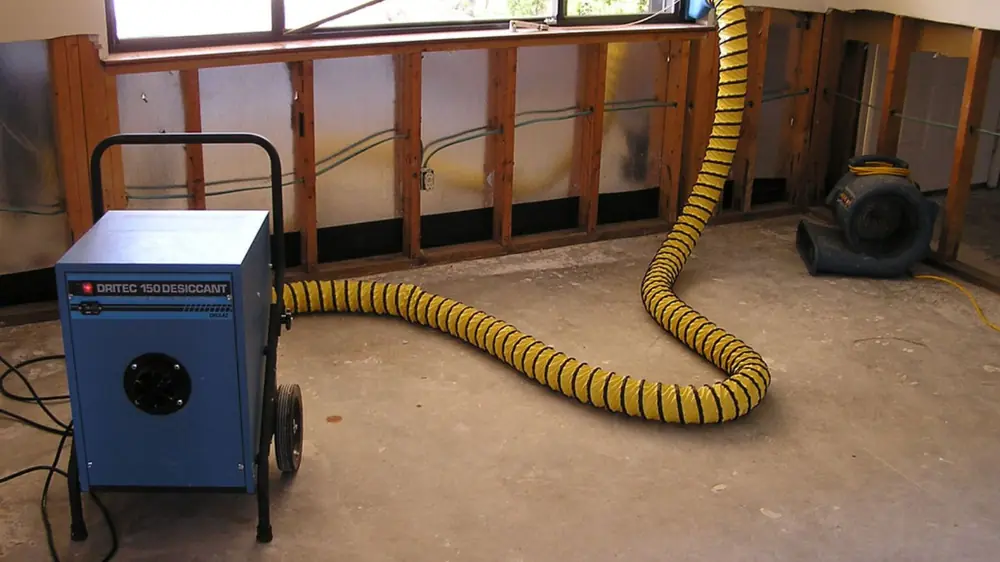
Air movers push dry air across wet surfaces and lift moisture off them. LGR dehumidifiers, short for low grain refrigerant units, pull that moisture out of the air so it does not settle back into walls. Wall cavities may be vented at the baseboard so air reaches the framing.
Pin and pinless moisture meters give a number for each material. A thermal imaging camera shows cool, wet patches behind paint and tile, so nothing is missed. Readings are logged on day one and again every day, and the equipment is moved when the numbers stall.
Some materials are removed instead of dried. Saturated carpet pad, wet insulation and drywall that soaked in Category 2 or 3 water are the usual ones, because drying them costs more time than replacing them and risks leaving moisture behind. Equipment comes out only when readings reach the dry goal, often after 3 to 5 days, though dense assemblies can take longer.
Water Categories and Drying Classes: How We Decide
The ANSI/IICRC S500 standard gives restorers two separate questions to answer. Category asks how clean the water was, and class asks how much of the structure is wet. The table shows how each answer changes the plan.
| S500 term | What it means | What it usually changes |
|---|---|---|
| Category 1 | Clean source, such as a supply line or tub overflow | Dry in place if caught early |
| Category 2 | Significant contamination, such as washer or dishwasher discharge | Porous materials like pad come out, the rest is cleaned and dried |
| Category 3 | Grossly contaminated, such as sewage or floodwater | Porous materials removed, surfaces sanitized, containment used |
| Class 1 | Least water, in low-absorbing materials | Smaller equipment count, shorter drying |
| Class 2 | Whole rooms of wet carpet and pad, moisture wicking up walls | More air movers and dehumidifiers, wall cavities opened |
| Class 3 | Water from above, soaking ceilings, walls and insulation | Heaviest air movement, ceiling and insulation removal common |
| Class 4 | Deep saturation in dense materials such as hardwood, plaster or concrete | Specialty drying and a longer timeline |
Either answer can change once walls are opened, so the plan is rechecked at each daily reading.
Signs Water Is Still Hiding Behind the Surface
These signs, often noticed a day or two after the leak, point to moisture still trapped in the structure.
- A musty smell in a room that looks dry.
- Baseboards swelling or paint bubbling above the floor.
- Wall surfaces that feel cool to the touch.
- A ceiling stain that keeps growing after the leak stopped.
Mold needs moisture, so wet materials left past the 24 to 48 hour window are where growth tends to start. If you can already see growth, that is a job for mold remediation under the S520 standard, and health questions belong to your physician.
Where the Water Usually Comes From
The calls we hear most describe the same few sources. A washer supply hose or valve fails, a pipe bursts under a sink, a toilet supply line leaks, an AC condensate line backs up, a roof leaks after rain, or water collects in a crawl space. Slow leaks inside walls are the hardest to catch.
The source decides the category and the plan. A supply-line failure starts clean, a backed-up condensate pan does not, and a roof leak travels along framing before it shows on a ceiling. Mitigation stops the water damage but does not fix the cause. A plumber or roofer fixes the source, and we coordinate drying around that work.
Dry in Place or Remove: Honest Trade-Offs
Most jobs mix both approaches, such as lifting carpet to dry it while discarding the pad.
Dry in place
Best when water was clean and caught early. It keeps your finishes and cuts rebuild work, but it needs steady equipment and daily readings, and it can fail if moisture hides in a cavity.
Remove and replace
Best for saturated pad, wet insulation and contaminated drywall. It leaves less risk behind and speeds drying, but it adds rebuild work and cost later.
What Changes the Price of Water Mitigation
Two houses with the same leak can cost very different amounts. These factors move the number. Same-day and after-hours calls are scoped the same way, with price explained before work starts.
| Factor | What it changes |
|---|---|
| Water category | Contaminated water adds removal, protective gear and sanitizing |
| Size of the wet area and class | More wet area means more extraction, equipment and monitoring |
| Materials involved | Hardwood, plaster and concrete dry slowly and may need specialty equipment |
| Days of drying | Equipment count and daily visits scale with how long readings take to reach goal |
| Hidden moisture | Water found behind cabinets, under floors or in ceilings widens the scope |
Insurance works on cause. Sudden and accidental water damage, like a burst supply line, is often covered, while gradual leaks and neglect often are not, and flood damage is usually excluded and needs separate flood coverage. Check your policy and ask your insurer. Photos, daily moisture readings and a written scope all help document a claim.
Want your real number? Call (626) 879-0276.
What Mitigation Does Not Do
Mitigation is not plumbing repair, roofing repair or basement waterproofing, and it does not rebuild what was removed. Once the structure reads dry, the next job is water damage repair, where drywall, flooring and paint go back in.
Our overview of water damage restoration in Temple City shows how mitigation, cleanup and repair connect, and emergency water removal covers the extraction step on its own.
Temple City Note: Know Who Supplies Your Water
Golden State Water Company's San Gabriel service area covers portions of Temple City, and not every address is served by it. Check your water bill now to see who your supplier is. If the leak is on the street side of your meter, the supplier is the one to call, so having the name ready saves minutes when water is already moving.
Frequently asked questions
Yes. Dispatch answers 24/7, including nights, weekends and holidays. Same-day scheduling is common for active water, though we do not promise an arrival time because it depends on crew availability and how many calls are ahead. Tell dispatch what the water touched so the right equipment goes first.
Fans move air across the top of carpet, but water sits in the pad and subfloor below. Without dehumidifiers pulling moisture out of the air, the damp just recirculates. A moisture meter reading on the pad and subfloor will show whether the carpet can be saved.
Many jobs read dry in about 3 to 5 days, but dense materials like hardwood, plaster or layered floors can take longer. The real answer is the dry goal, which is checked every day with a moisture meter. Equipment stays until the numbers match unaffected materials.
Not by default. Clean-water leaks caught early can often be dried in place by venting the cavity at the baseboard. Walls are opened when readings, thermal imaging or contamination show that drying alone will not work.
It depends on the cause. Sudden and accidental damage is often covered, gradual leaks often are not, and flood is usually excluded without separate flood coverage. Check your policy and ask your insurer, and keep photos and moisture readings for the claim.
Questions about your home? Talk to the 24/7 dispatch line.
☎ Call (626) 879-0276