
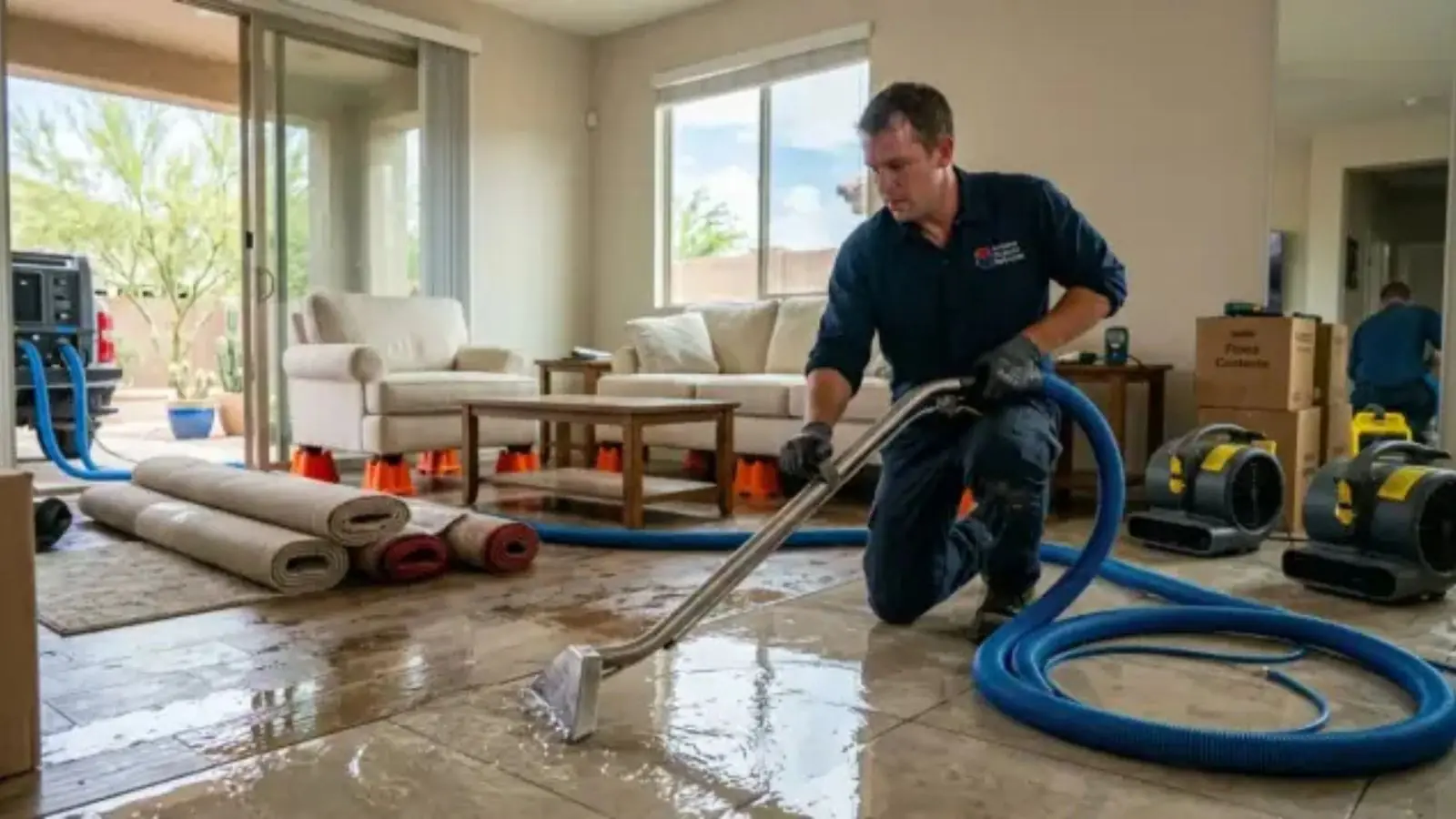
If water is standing on your floor, every hour it stays makes the job bigger. We dispatch 24/7, so call any time. Until help arrives, stop the source, shut off the main water valve, and lift furniture legs, bags and electronics out of the water. Switch off power to wet rooms only if you can reach the panel while dry. Keep kids and pets out of water that came from a drain or toilet.
Emergency water removal is the first stage of a water job: pumps and extraction units pull standing and absorbed water out of the structure before drying begins. It is not the same as drying itself, which is covered under water mitigation, or debris cleanup, which belongs to water damage cleanup. Call (626) 879-0276 and describe what you see.
When Standing Water Is an Emergency
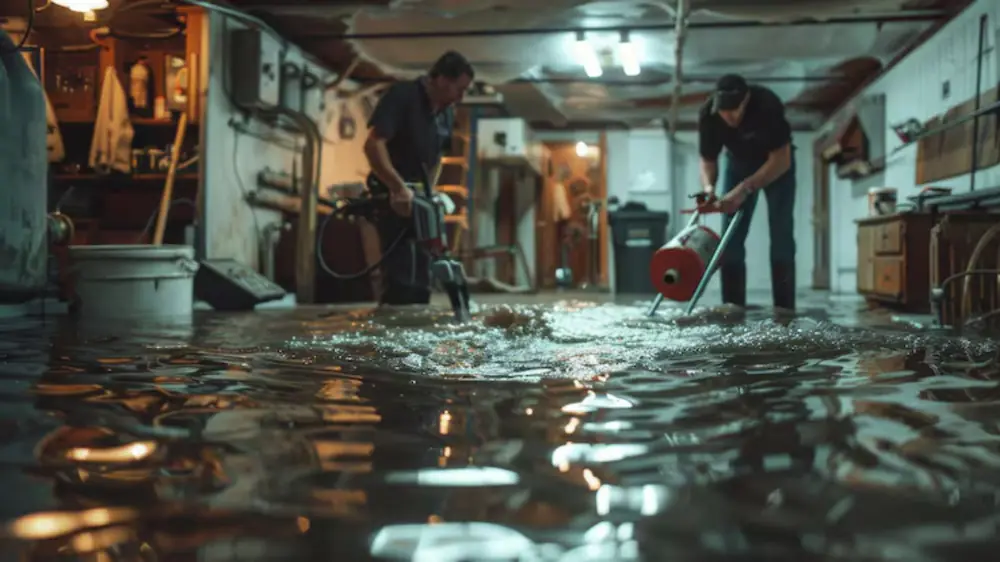
Standing water is an emergency when it is still rising, when it covers carpet or a hardwood floor, when it sits against drywall, or when it is more than a puddle you can mop in minutes. Carpet pad acts like a sponge, and water wicks up walls by several inches in a few hours. After 24 to 48 hours, the risk of mold goes up, according to EPA guidance on drying wet materials.
It is also an emergency if the water touches outlets, a panel or appliances, or if it came from a sewer line. Stay out, call 911 or your utility for any electrical or gas concern first, and then call us. Storm and groundwater events have their own handling on the flood damage restoration page.
Burst Pipe Water Damage
Most burst pipe calls start the same way. Find the main shut-off valve, usually where the water line enters the house, often at an outside wall, in a garage or near the water heater, and turn it fully clockwise. Then open a low faucet to relieve pressure. Individual shut-off valves under sinks and behind toilets can stop a single fixture without cutting the whole house.
Common sources are supply lines under sinks, washer hoses and valves, ice maker lines and water heater failures. Before anything is moved, photograph the source, the water line on walls and each damaged item. Those photos, plus later moisture readings, help any claim.
Extraction goes first. We pull standing water, then use moisture meters and a thermal imaging camera to find water hiding in walls and under cabinets. If readings show water trapped behind drywall or under cabinet toe kicks, small holes or panel removal let air and dehumidification reach it. Repairing the pipe is a plumber's job, and we will tell you if the leak is still active.
Water in the house right now? Our dispatch line is open 24/7.
☎ Call (626) 879-0276Truck-Mounted vs Portable Extraction Units
Both do the same job at different scale. Truck-mounted units stay outside, with long hoses running in, and they have the suction and lift for large volumes. Portable extraction units work inside, move room to room, and fit stairs, closets and tight spaces. On many jobs we use both.
Pumps handle depth. A submersible pump clears water measured in inches or more, then extractors pull what the pump cannot reach. Carpet can often be extracted in place, with the pad lifted if it is soaked or contaminated. Hardwood and laminate are tricky and may need specialized drying, so tell us what flooring you have.
Wet-vacs from a store are fine for a small spill. Beyond a room or two, they leave far more water behind than you would expect.
What Happens First in Different Situations
The first step depends on the water and the room. This table shows the usual order of work.
| Situation | What happens first | Watch for |
|---|---|---|
| Burst pipe or supply line | Source stopped, then extraction, then moisture mapping | Water inside walls and cabinets |
| Washer or water heater overflow | Extraction on hard floors and carpet, pad checked | Water under appliances and into the next room |
| Water through ceiling | Contents moved, ceiling water drained or opened, then floor extraction | Sagging drywall and wet insulation |
| Toilet overflow or drain backup | Safety check, PPE, containment, extraction, removal of porous materials | Contamination category, which changes the plan |
| Basement or crawl space | Pumping in stages, then extraction and drying | Depth against walls, slab moisture |
What to Do While You Wait
These steps are safe for most households and make the job easier.
- Shut off the main water valve and, if safe, power to the wet area.
- Take photos and short videos of the source, water line and damage before moving things.
- Lift valuables, papers and electronics to dry surfaces.
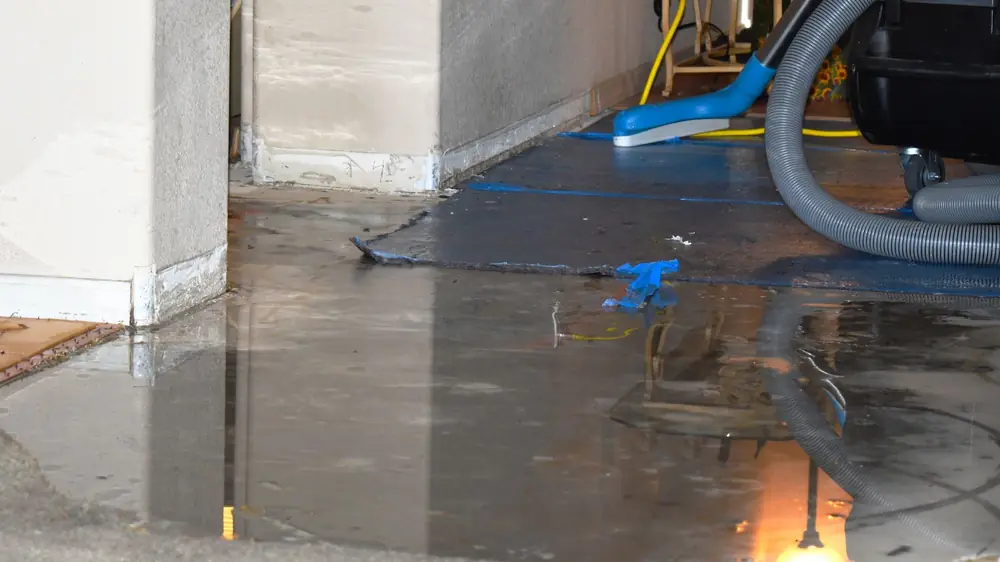
- Pull up loose rugs and put foil or wood blocks under furniture legs.
- Open interior doors and cabinet doors to let air in, unless water came from a sewer.
- Do not use a household vacuum on standing water, and do not walk through water near live electrical items.
Where Water Removal Jobs Come From Here
Supply lines, washer hoses and water heaters are what fail most often in any home, especially older ones. The city sits at the base of the San Gabriel Mountains at about 400 feet, so heavy storm runoff is also a reason to know where your main valve is. Locate it now, label it, and the next emergency starts with one turn instead of a search.
Signs Water Is Still in the Structure
Surface dry does not mean dry. Look and feel for these signs after extraction.
- Carpet that feels cool or damp underfoot long after the surface looks dry.
- Baseboards that bow or paint that blisters.
- A musty smell, which can point to materials still holding moisture.
- Hardwood that starts to cup or crown.
- A rising utility bill or the sound of water running when nothing is on.
If any of these show up after the first dry-out, moisture readings tell us where the water went. Lingering damp is also why many jobs flow into mold remediation when drying is delayed.
Options and Honest Trade-Offs
You can extract a small spill yourself with a wet-vac and fans, and for a glass of water on tile that is reasonable. For anything that reached carpet pad, drywall or a second room, professional extraction plus drying is more thorough and often saves flooring. Saving carpet over a clean-source leak is possible. Saving carpet after sewage or floodwater usually is not.
Ripping out materials early costs more up front but removes the moisture source for mold. Leaving wet materials in place can look cheaper and often costs more later. We explain the options and the likely scope before we start. For the broader picture, see how we approach water damage restoration in Temple City as a whole job.
What Changes the Price of Water Removal
No honest number is possible before someone sees the water. These factors drive the scope.
| Factor | What it changes |
|---|---|
| Water volume and depth | More pumping and extraction time, and sometimes staged removal. |
| Affected area and flooring | Carpet, pad, hardwood and tile each need different handling. |
| Water category | Contaminated water adds PPE, containment and disposal. |
| Hidden moisture | Water inside walls or under cabinets adds opening, drying equipment and days. |
| Time of call and access | After-hours starts, stairs and distance from the truck change setup. |
Insurance in general terms: sudden and accidental water damage, such as a burst pipe, is often covered. Gradual leaks and neglect often are not, and flood damage is usually excluded and needs separate flood coverage. Check your policy and ask your insurer. Photos, moisture readings and a written scope help any claim, and we promise no coverage outcome.
Want your real number? Call (626) 879-0276.
Water Removal Calls Around Temple City
We work out of 9123 Las Tunas Dr in Temple City and also take calls from nearby cities such as El Monte and Rosemead. Golden State Water covers only portions of Temple City, so check your bill for your supplier before you call about a broken main. That saves time on a leak at the meter. For repair permits after water damage, rules vary by job, so ask the city Building & Safety division.
Frequently asked questions
Yes. Dispatch is 24/7, including nights, weekends and holidays. Call (626) 879-0276 and we will tell you what to do while a crew is arranged. We do not promise an arrival time.
It is usually where the water line enters the house, often at an outside wall, in a garage, in a utility closet or near the water heater. Many homes also have a meter box near the street with a valve. If you cannot find it, check your water bill to see who your supplier is and call them.
Removal pulls out standing and absorbed water with pumps and extractors. Mitigation is the wider job of stopping damage, which includes drying, moisture monitoring and protecting materials. Most real jobs use both.
Often yes with clean-source water if extraction starts quickly, though a soaked pad is commonly replaced. Carpet touched by contaminated water is usually removed. We tell you what is saved before work starts.
Turn it off to wet areas only if you can reach the panel while standing dry. If water is near the panel or outlets, stay away and call 911 or your utility first. Do not touch wet electrical items.
Only when readings show water trapped inside them. We start with extraction and moisture mapping, and open walls where drying in place will not reach. The plan is explained before work starts.
Questions about your home? Talk to the 24/7 dispatch line.
☎ Call (626) 879-0276