
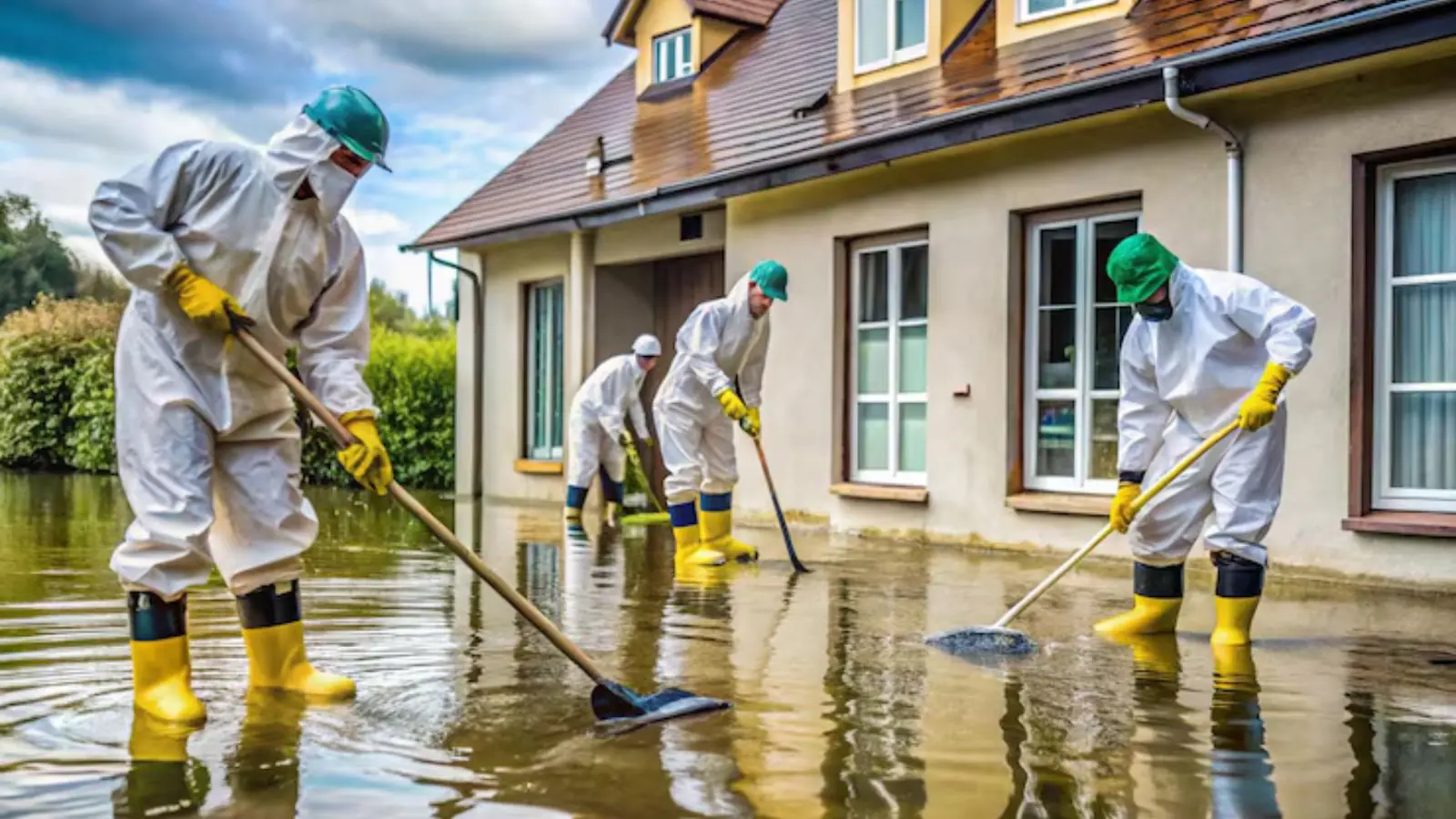
The source is stopped but the house is still wet, and the next 48 hours decide how much has to come out. We take calls 24/7. Until a crew arrives, keep the main water valve closed, lift valuables off wet floors, keep people and pets out of water from a drain or toilet, and cut power to wet areas only if you can reach the panel dry.
Water damage cleanup is the removal of standing water, wet debris and contaminated materials, followed by cleaning, sanitizing and deodorizing the affected rooms in Temple City, CA. It sits between stopping the water and drying the structure, and it is separate from the rebuild.
When Cleanup Cannot Wait
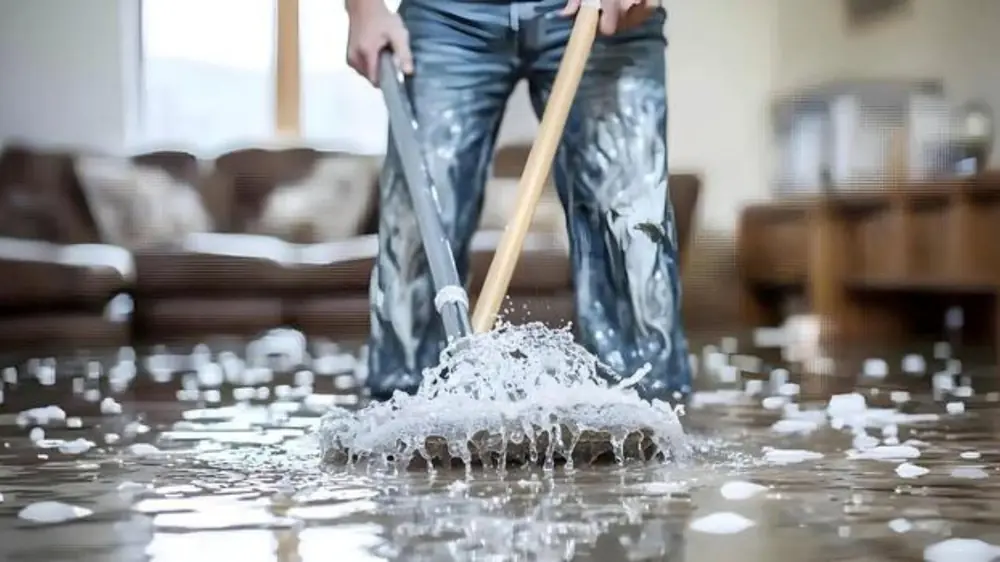
Cleanup is urgent when water came from a sewer backup, a toilet overflow, a washing machine drain or outside flooding, and when it has been sitting on carpet or in walls. Porous materials absorb contamination, and the longer they stay wet the fewer of them can be saved. Same-day scheduling is common for these calls, and after-hours and weekend calls go to dispatch, which sets the order of work.
- If water touches a panel, outlet or switch, stay out of that room.
- Cut power only if you can reach the panel while standing on dry ground.
- For any electrical or gas risk, call your utility or 911 before you call us.
- If sewage is involved, do not wade in or move belongings by hand. Keep children and pets away.
Once the area is safe, call (626) 879-0276 and tell dispatch what the water touched and where it came from.
What Gets Removed in the First 48 Hours
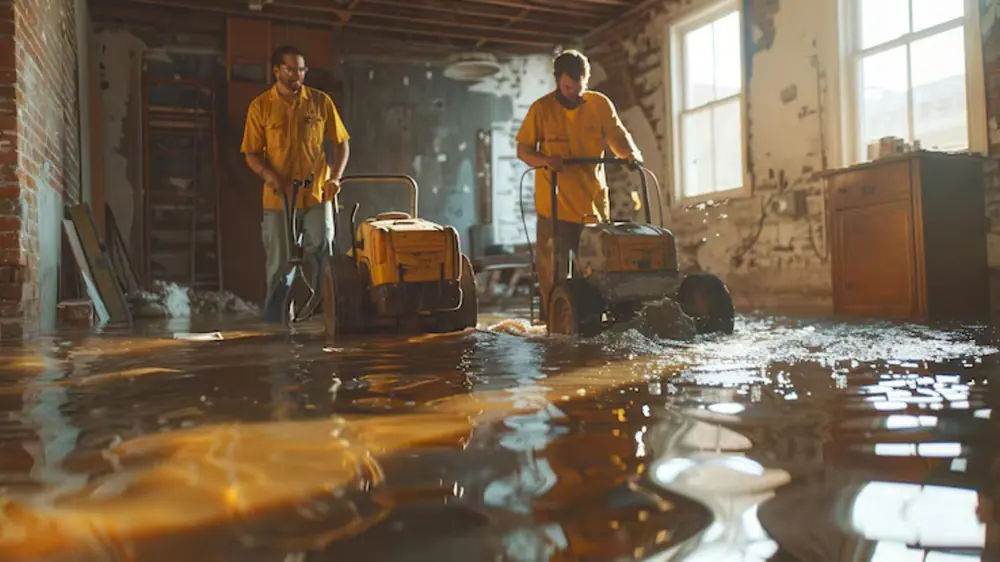
Cleanup starts with extraction, using truck-mounted or portable extraction units to pull standing water. Then the crew removes whatever holds water or contamination so the rest of the house can dry.
- Carpet pad, which acts like a sponge and is usually discarded. The carpet itself is sometimes lifted, cleaned and reinstalled if the water was clean.
- The lower section of wet drywall, cut in a straight line a bit above the visible wet line so new board can be taped in cleanly.
- Wet insulation, which loses its value and holds moisture against framing.
- Baseboards and trim, saved when possible and pulled to expose the wall cavity.
- Swollen laminate, particleboard cabinet bases and vinyl that has lost its bond.
- Wet debris, bagged and hauled out for disposal.
Everything removed is photographed and listed first. Those photos help later if you file a claim, and they show you what was taken and why.
Water in the house right now? Our dispatch line is open 24/7.
☎ Call (626) 879-0276Category 2 and Category 3 Water: Handling the Difference
ANSI/IICRC S500 sorts water by contamination. Category 2 carries significant contamination, such as washing machine discharge, and Category 3 is grossly contaminated, such as sewage or floodwater. The category decides what is kept and what is bagged.
On Category 2 and 3 jobs, crews wear protective gear and set up containment barriers with plastic sheeting to keep the affected room separate from clean areas. Porous materials such as carpet, pad and wet drywall are removed instead of cleaned. Hard surfaces are cleaned first and then treated, and debris leaves in sealed bags.
Water that starts out clean can slip into a higher category if it sits. A supply-line leak left in carpet for days is no longer treated like fresh tap water.
Antimicrobial Treatment and Deodorizing, Described Honestly
After wet materials are out and hard surfaces are cleaned, an antimicrobial product is applied to what remains, such as framing, concrete and subfloor. It helps limit bacteria and the conditions that favor mold on those surfaces. It does not sterilize a house, and it does not replace removal.
Mold needs moisture, which is why EPA guidance says drying wet materials within 24 to 48 hours usually prevents growth. Antimicrobial treatment on a still-wet wall is only a surface step. Visible growth is a job for mold remediation under the S520 standard, not a spray.
Odor works the same way. Smell comes from wet material, so removal does most of the deodorizing. HEPA air scrubbers then filter the air, and hydroxyl or similar equipment may be used on lingering odor. A smell that returns usually means moisture is still in a wall or floor.
Contents: What Can Be Cleaned and What Is Discarded
Hard goods such as solid wood furniture, glass, metal, plastic and ceramics are usually wiped, cleaned and sanitized, then returned. Soft goods depend on the water category. Clean water leaves more of them salvageable, while Category 3 water usually means upholstered furniture, mattresses and stuffed items are discarded.
Wet electronics and appliances should stay unplugged until checked. Photos and paper documents can sometimes be dried, or frozen to buy time, but no crew can promise everything comes back. Anything discarded is listed and photographed so you have a record for your insurer.
Keep or Remove: A Decision Table by Material
This is the framework a crew works from. Individual jobs vary, and meter readings can change an answer.
| Material | After clean water (Category 1) | After contaminated water (Category 2 or 3) |
|---|---|---|
| Carpet | Often lifted, cleaned and dried for reinstall | Usually removed and discarded |
| Carpet pad | Usually discarded | Discarded |
| Drywall | Dried in place if caught early, cut out if sagging or stained | Cut out above the wet line |
| Insulation | Removed if soaked, sometimes saved if barely damp | Removed |
| Hardwood floor | Often dried with mats, then judged for cupping | Usually removed if contaminated |
| Tile and stone | Cleaned and kept, subfloor checked | Cleaned and sanitized, grout checked |
| Solid wood furniture | Wiped, dried and kept | Cleaned and sanitized, kept if sound |
| Upholstery and mattresses | Case by case | Discarded |
Drying science, such as air movers and dehumidifier sizing, lives on our water mitigation page. This page stops at what comes out and how what remains is cleaned.
Signs a Mop and Fans Are Not Enough
Callers in the Temple City area describe the same starting points again and again: a washer valve that failed, a burst pipe under a sink, sewage from a floor drain, water from an AC condensate line, or a roof leak that soaked a ceiling. Any of these can leave behind signs that cleanup is needed.
- A sour or sewage smell after the surface looks dry.
- A brown water line on drywall that climbs higher over time.
- Carpet that squishes underfoot or smells damp.
- Debris, silt or discolored water in the room.
- Baseboards swelling or paint peeling at the bottom of walls.
Cleanup, Mitigation and Repair Are Three Different Jobs
Mitigation stops the damage and dries the structure, cleanup removes and sanitizes what the water spoiled, and repair rebuilds. Outside water is covered under flood damage restoration. The last step is covered on our water damage repair page.
What Changes the Price of Water Damage Cleanup
Cleanup cost follows how much has to come out and how hazardous it is. Same-day and after-hours jobs are scoped the same way, and we explain scope and price before work starts.
| Factor | What it changes |
|---|---|
| Water category | Category 2 and 3 add protective gear, containment and sanitizing |
| Amount of material removed | More carpet, pad, drywall and insulation means more labor and hauling |
| Volume of contents | Packing out, cleaning and storing belongings adds time |
| Access and layout | Stairs, tight rooms and multiple floors slow carrying and hauling |
| Odor and treatment needs | Heavy odor can call for air scrubbers and added deodorizing visits |
Insurance works on cause. Sudden and accidental water damage, like a burst supply line, is often covered, while gradual leaks and neglect often are not, and flood damage is usually excluded and needs separate flood coverage. Check your policy and ask your insurer. Photos, daily moisture readings and a written scope all help document a claim.
Want your real number? Call (626) 879-0276.
California Hiring Rules for Cleanup Work
California requires a contractor licensed by the Contractors State License Board for work worth $1,000 or more in labor or materials. A room of removed carpet, pad, drywall and insulation plus hauling can reach that figure, so verify any contractor's license at cslb.ca.gov before the tear-out begins. Common restoration classes include B (General Building), C-21 (Demolition) and C-61 (Limited Specialty), and you can also ask for proof of general liability insurance.
Frequently asked questions
Yes. Dispatch answers 24/7, including nights, weekends and holidays. Same-day scheduling is common for sewage and active contamination, though we do not promise an arrival time because it depends on crew availability. Tell dispatch what the water touched so the crew arrives with the right protective gear.
It is not a good idea. Category 3 water is grossly contaminated and soaks into porous materials, and household cleaners will not clean those materials. Keep people and pets away and let a crew with protective gear and containment handle it.
As soon as possible. Pad holds water like a sponge and slows drying of the subfloor, and EPA guidance puts the target for drying wet materials at 24 to 48 hours. Pad is usually discarded even when the carpet is saved.
No. Antimicrobial treatment helps on cleaned surfaces, but mold needs moisture, and a wet wall can still grow it under a treated surface. Removal and drying come first, and any visible growth calls for remediation to the S520 standard.
Only what cannot be cleaned. Hard goods are usually cleaned and kept, while soft goods exposed to Category 3 water are usually discarded. Items are photographed and listed before they go, so you decide with a record in hand.
No. Cleanup removes and sanitizes, and drying is a separate step with its own equipment and readings. Ask for both to be scoped together so the structure is checked with a moisture meter before anyone rebuilds.
Questions about your home? Talk to the 24/7 dispatch line.
☎ Call (626) 879-0276