
Search for water damage help and you'll see the same handful of words used in different ways: restoration, remediation, mitigation, repair. Companies use them loosely, and the difference affects what you're paying for and what you're left with when the crew drives away.
This guide gives plain definitions, the order the work follows, the published standard behind it, and who handles which piece. The short version is that restoration is the full path from a wet house to a finished one, and mitigation is the emergency opening stage of that path.
Four terms, four different jobs
LA County's Department of Consumer and Business Affairs draws a clear line in its guide to hiring remediation and restoration contractors. Remediation removes hazards and prevents further damage, whether from water or mold. Restoration repairs and rebuilds what was damaged, such as drywall and flooring.
In everyday use, companies stretch these words. A firm advertising water damage restoration may cover the emergency drying and some rebuilding, while another stops at drying and hands off to a builder. Ask any company where its scope starts and where it ends.
| Term | What it means | Typical example |
|---|---|---|
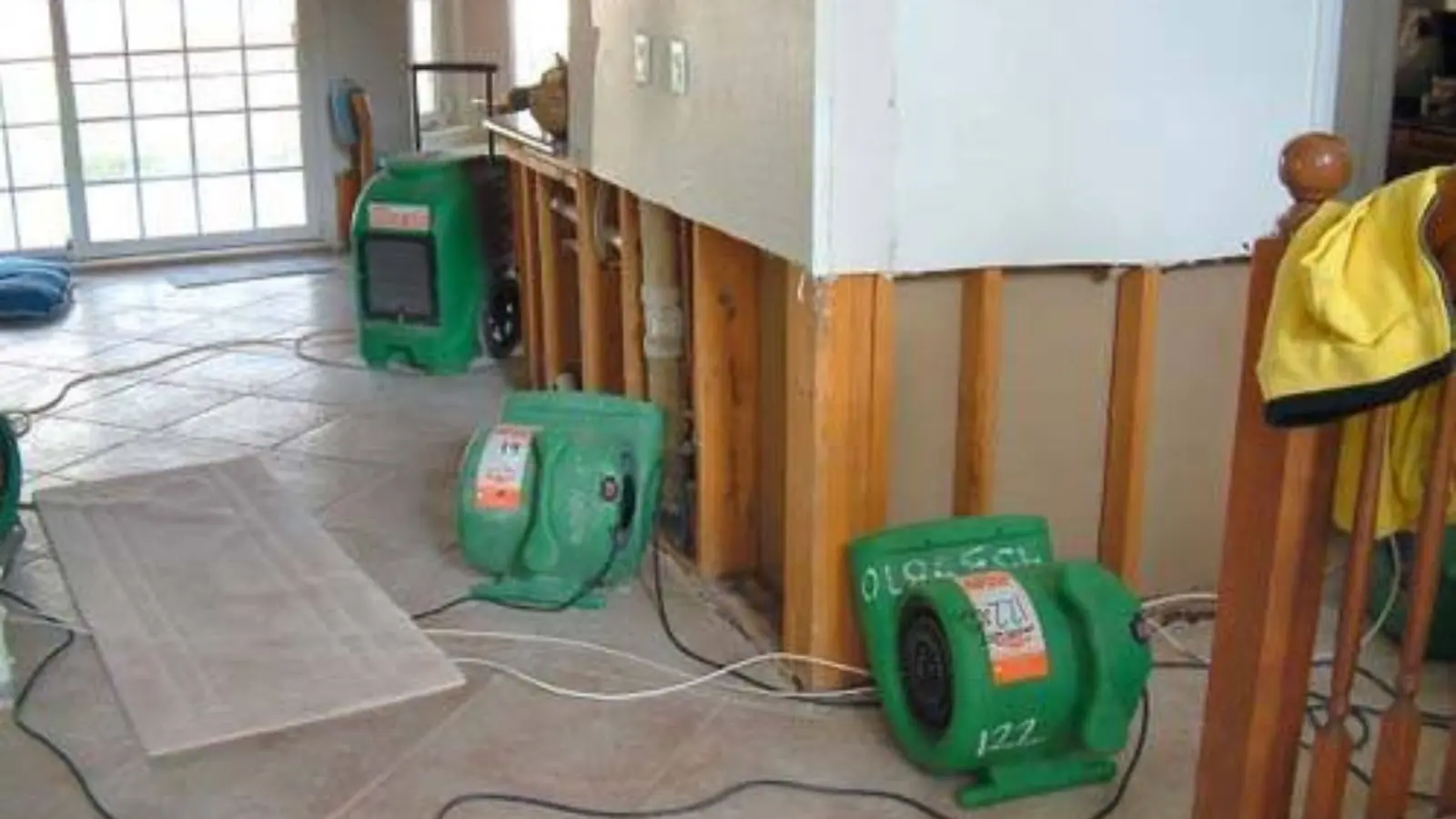
| Mitigation | Stopping the source and limiting damage in the first days | Extracting standing water, setting air movers and dehumidifiers |
| Remediation | Removing hazards and preventing further damage | Removing soaked insulation, cleaning affected surfaces, containing mold |
| Restoration | Repairing and rebuilding what was damaged | New drywall, paint, flooring and trim |
| Repair | Fixing one specific component | Replacing a cracked supply line or patching a ceiling |
Mitigation and remediation overlap heavily on a water job. Think of mitigation as the emergency response and remediation as the wider hazard removal. Our page on water mitigation covers that first stage in detail.
The stages of a water job, in order
Every loss is different, but most professional jobs follow the same sequence. Skipping a step usually shows up later as a warped floor or a musty smell.
- Stop the source. Drying can't work while water keeps coming in, so a valve or a plumber comes first.
- Check safety and assess. Look for electrical hazards and identify the water category.
- Extract standing water with portable or truck-mounted extraction units.
- Map the moisture with moisture meters and thermal imaging cameras.
- Remove what can't be saved, such as soaked insulation, carpet pad or lower drywall.
- Dry the structure with air movers and LGR dehumidifiers, with readings taken each day.
- Clean and sanitize affected surfaces, using antimicrobial treatment where the situation calls for it.
- Verify with final moisture readings against the dry standard.
- Rebuild drywall, paint, flooring and trim.
The first eight steps usually happen over several days. Rebuilding often follows once readings confirm the structure is dry, and its timeline depends on materials, permits and scheduling.
Water in the house right now? Our dispatch line is open 24/7.
☎ Call (626) 879-0276The standard behind the work: ANSI/IICRC S500
ANSI/IICRC S500 is the published standard for professional water damage restoration. It sorts water into three categories. Category 1 is a clean source, such as a supply line. Category 2 carries significant contamination. Category 3 is grossly contaminated, such as sewage or floodwater.
It also sorts damage into Classes 1 to 4 by how much material is wet. More wet material means more equipment and more time. A standard isn't a certificate, though. Ask any company whether its crews work to S500 and how they document it.
Who does what on a water loss
One water event can bring four different professionals to your door. Knowing their roles keeps you from paying one for another's job.
- Restoration company: extraction, drying, removal of wet materials and moisture documentation.
- Plumber: repairs the pipe, fixture or drain that caused the loss. Restoration crews dry the water but don't fix plumbing.
- Insurance adjuster: reviews coverage and scope for your claim.
- General contractor: rebuilds the finishes and handles permits where they're required.
Roles overlap, and some restoration firms employ builders. California requires a Contractors State License Board license once a job passes a modest dollar threshold, so check any contractor at cslb.ca.gov. If you're comparing companies in nearby areas, our pages on water damage restoration in Arcadia and water damage restoration in Rosemead describe how the same stages apply there.
What 'restored' should actually mean
A room that feels dry isn't necessarily dry. Drywall, framing and subfloors can hold moisture after the surface looks fine, and that hidden moisture is what causes cupped floors and mold later. A job is restored when moisture readings in the affected materials return to the dry standard for that material, compared with an unaffected area.
Ask for the numbers in writing. You want the starting readings, the daily readings and the final readings. Those records also help an insurance claim, and if a company can't produce them, you're trusting your eyes, which is the weakest instrument in the house.
- Final moisture readings for each affected area
- A list of what was removed and why
- Confirmation that drying equipment has been taken out
- A clear list of what still needs rebuilding
What restoration does not do
Restoration isn't waterproofing. It dries and rebuilds after a loss, but it doesn't stop groundwater or fix drainage, and basement waterproofing is a separate trade. It also isn't plumbing repair, so it won't prevent the same pipe from failing again.
It can't promise that every item survives. Saturated particle board and old carpet pad are often cheaper to replace than to dry. An honest company tells you what's salvageable before work starts, and explains scope and price in advance. Rebuilding is its own line of work, covered on our water damage repair page.
Finally, restoration isn't a promise that your home returns to exactly how it looked. Paint colors, flooring lots and older trim may not match perfectly, and some of that is a design choice during rebuilding. Talk through finishes with your builder before the work starts.
Restoration and Rebuilding in Temple City
The rebuild stage is where the city gets involved. Temple City's Building & Safety division reviews plans, issues permits and inspects construction, and its plan check covers structural, mechanical, plumbing and electrical plans. The city's page doesn't say which post-water repairs need a permit, so permit rules vary by job. Ask Building & Safety before a contractor starts anything beyond drying, and get the answer written into your contract.
If a permit is issued, it's valid for six months, so build your rebuild schedule around that window. Inspections run Monday to Thursday, and the permit counter is open Monday to Thursday, 8:00 to 11:30 AM and 1:30 to 4:30 PM, with appointments recommended. Call (626) 285-0488 for general questions so your contractor isn't waiting on an answer.
Frequently asked questions
Not exactly. LA County's consumer guidance says remediation removes hazards and prevents further damage, while restoration repairs and rebuilds. Many companies use the words interchangeably, so ask what's included in the written scope.
Sometimes. Some companies handle drying only, and others also rebuild drywall, paint and flooring. Ask whether rebuilding is in the same contract, and whether it is priced separately.
Ask for documented moisture readings that show affected materials back at the dry standard, compared with unaffected areas. A room that looks and feels dry can still hold moisture inside the walls. Final readings in writing are the proof.
It depends on the job. The city's Building & Safety division reviews plans, issues permits and inspects construction, but permit rules vary by job. Call (626) 285-0488 before rebuilding starts and ask about your specific repairs.
Often both. The plumber fixes the pipe, fixture or drain, and the restoration crew removes and dries the water it released. Stopping the source first matters, because drying can't get ahead of water that's still arriving.
Questions about your home? Talk to the 24/7 dispatch line.
☎ Call (626) 879-0276