
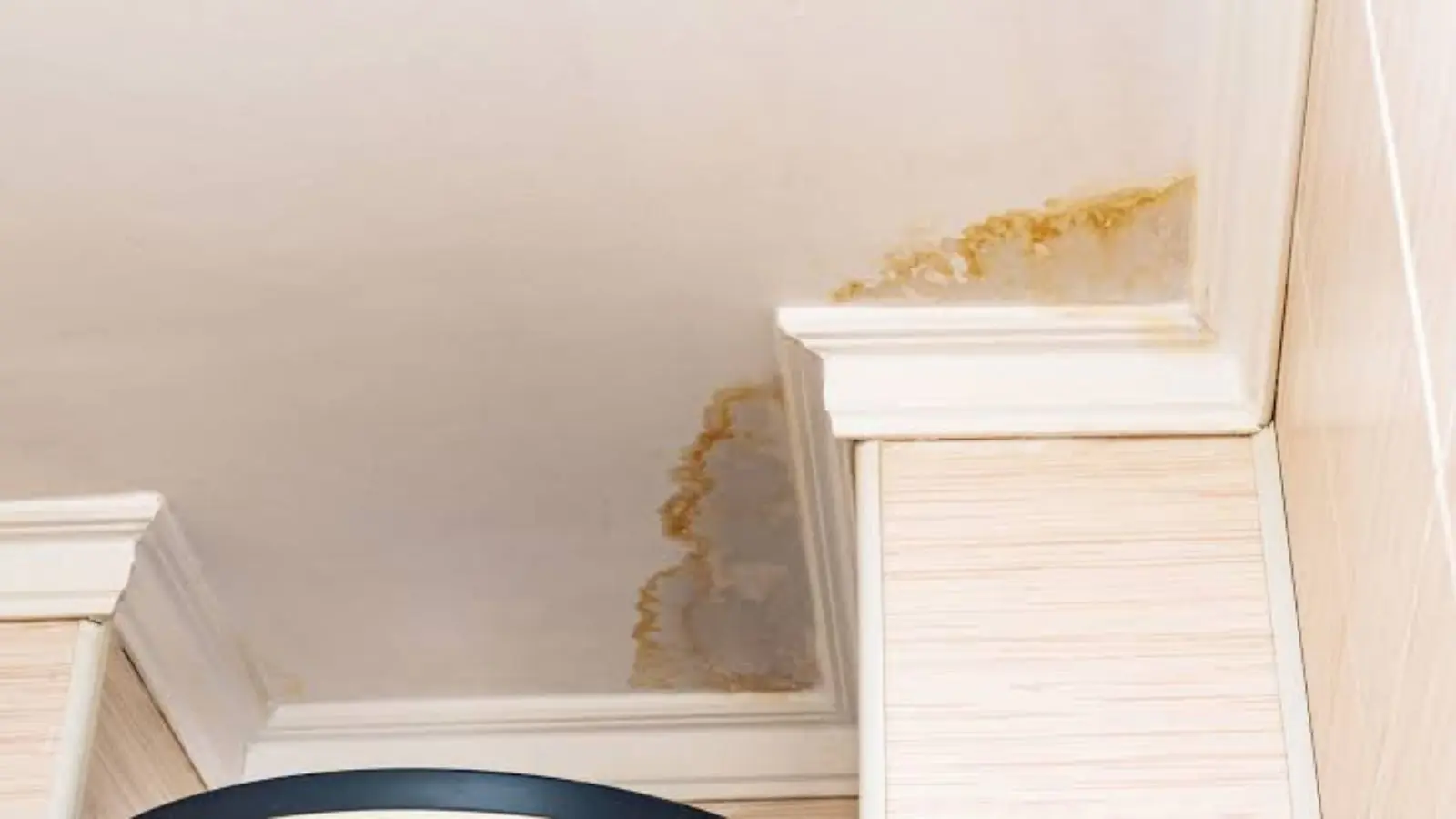
A ceiling rarely fails all at once. First comes a faint tan ring, then a soft spot, then a bubble of paint that feels cool and damp. By the time water drips, the drywall above you has usually been wet for days.
This guide covers the signs of ceiling water damage, the safe first hour, and how to tell a roof leak from a plumbing leak, an air conditioner drain problem or an upstairs bathroom. It also says plainly what you can handle yourself and where a moisture meter and a trained crew save you from guessing.
Signs your ceiling has water damage
Not every stain means an active leak. Old rings that are dry and hard are history, while new ones are soft, darker at the center and often lighter at the edge. Press a gloved finger against the spot. If the surface gives or feels cold, moisture is still in there.
- Tan, yellow or brown rings that grow after rain or after someone uses the shower upstairs.
- Paint that blisters, peels or looks like a bubble under a wallpaper sheet.
- A sag or belly in the drywall, often with a visible seam or screw heads showing through.
- Drips, beads of water on a light fixture, or a steady tick into a bucket.
- A musty smell in one room that gets stronger when the heat or air conditioning runs.
Several signs together point to a bigger wet area than the stain shows. The visible ring is usually the smallest part of the problem, because water spreads along joists and insulation before it breaks through.
The first hour: what to do and what to skip
Your first job is safety, not repair. Water and electricity share ceilings through light fixtures, fans and wiring, so treat any wet ceiling with a fixture as live until proven otherwise.
- Turn off power to that room at the breaker only if you can reach the panel without stepping in water. If you can't, stay out and call the utility or 911 for an electrical risk.
- Move people, pets, rugs and furniture out from under the wet area, and cover what you can't move with plastic.
- Place a bucket under any drip and a wide tub under a bulge.
- If the leak comes with the shower, sink or toilet upstairs, stop using that fixture and close its shutoff valve.
- If you suspect a burst supply line, shut the main water valve.
- Take photos and short video of the ceiling, the room and any damaged belongings before you touch anything.
Skip the urge to paint over a stain. Paint hides the ring and traps moisture, and the stain will bleed back through within weeks.
Water in the house right now? Our dispatch line is open 24/7.
☎ Call (626) 879-0276A sagging bulge: when to relieve it and when to wait
A drywall belly full of water can come down on its own, and the water plus wet gypsum is heavy. If a bulge is small and you can stand clear, a controlled release is safer than a surprise collapse. If it is large, near a light fixture, or you see sparks, hear buzzing or the fixture is wet, leave it and call for help.
- Set a large bucket or tub directly under the lowest point and lay plastic on the floor around it.
- Wear eye protection, a hat and gloves, and stand to the side with a long tool, not under the bulge.
- Poke one small hole at the lowest point of the sag with a screwdriver, so water drains in a stream instead of letting the panel drop.
- Let it drain fully, then leave the ceiling open to air and call for a moisture check.
Never cut a large hole yourself. A small relief hole is repairable, and a collapsed panel brings wet insulation down with it.
Finding the source: roof, plumbing, air conditioner or upstairs bath
The pattern of the stain often tells you where the water came from. The table below is a starting point, not a diagnosis, because water can travel several feet along a joist before it shows up.
| Pattern you see | Likely source | First check |
|---|---|---|
| Stain appears or grows only after rain | Roof, flashing or a vent boot | Look in the attic for wet sheathing, dark rafters or damp insulation |
| Stain grows with no rain, near a bathroom above | Tub, shower pan, toilet seal or drain | Run the fixture while someone watches the ceiling below |
| Steady drip even when nothing is in use | Pressurized supply line or water heater line | Check the water meter. If it moves with every tap off, shut the main |
| Dripping near an air handler or vent in warm months | Clogged air conditioner condensate drain | Look at the drain pan and line for standing water or algae |
| Ring around a recessed light or vent | Condensation from a cold duct or a nearby leak | Check insulation on ducts in the attic |
A thermal imaging camera and a moisture meter help here, because they show which materials are wet without cutting anything open. Restoration crews use them to map the damage. A plumber or roofer still has to fix the actual source.
What happens if you wait
Drywall, insulation and framing stay wet for a long time when nothing dries them. The EPA says drying wet materials within 24 to 48 hours of a leak usually prevents mold growth, and that mold needs moisture to grow. Past that window, the odds shift against you.
Ongoing moisture also weakens the paper face on drywall and rusts fasteners, so a patch that looks small can turn into a full panel replacement. If wet insulation sits above the ceiling, it holds water like a sponge and keeps feeding the stain even after the leak stops.
Drying, tear-out and repair: how a crew sorts it out
A typical job starts with moisture readings and a map of the wet area. Wet insulation and sagging drywall come out, usually a few inches beyond the last wet reading, so air can reach framing. Air movers and an LGR dehumidifier then run until the materials read dry on a meter, not just dry to the touch.
Professional work follows ANSI/IICRC S500, the published standard for water damage restoration, and it sorts water by contamination category and by how much material is wet. Ask any company whether its crews work to it. Our water mitigation service covers the drying stage, and the rebuilding afterward falls under water damage repair. Drying is not a plumbing or roofing repair, so the source still needs its own contractor.
A bathroom or kitchen above a ceiling can send contaminated water down, such as a toilet overflow. That changes the cleanup, because the standard treats it differently from clean supply water. Call (626) 879-0276 and describe the source, and we will tell you what to expect before anything starts.
Temple City notes for ceiling leaks
Temple City water service varies by address. Golden State Water Company's San Gabriel service area covers portions of Temple City, but not every home, so check your water bill to see who your supplier is. That matters at the first sign of a supply line leak, because the supplier is the one to call if the problem sits at the meter or the service line before your main valve.
Neighbors in nearby Arcadia can find local guidance on water damage restoration in Arcadia, and readers in San Gabriel can see how we handle leaks and wet ceilings in San Gabriel. If your ceiling stain started after rain, photograph the roofline and attic as well, since a roofer will want the same evidence your insurer asks for.
Frequently asked questions
No. A dry, hard ring can be an old leak that stopped. A stain that is soft, cool, growing or darker at the center is still wet. Mark the edge in pencil and check it over a few days, and use a moisture meter if you can borrow one.
Only if you can reach the breaker panel without standing in water. If water is near a light fixture, outlet or the panel itself, stay out of the room and call the utility or 911 for an electrical risk before anything else.
Not safely. Paint over a wet or unsolved stain traps moisture and the ring bleeds through. Fix the source, dry the area to a meter reading, then use a stain-blocking primer before repainting.
Roof leaks usually show up with rain and are often worse in the attic. Plumbing leaks show up with fixture use or even when nothing runs. Watching the water meter with all fixtures off is a quick test for a supply line leak.
It can. Golden State Water's San Gabriel area covers portions of Temple City, not every address, so your bill names your supplier. If the leak is at the meter or the service line before your shutoff, call that supplier, and call a plumber for anything inside your home.
Questions about your home? Talk to the 24/7 dispatch line.
☎ Call (626) 879-0276