
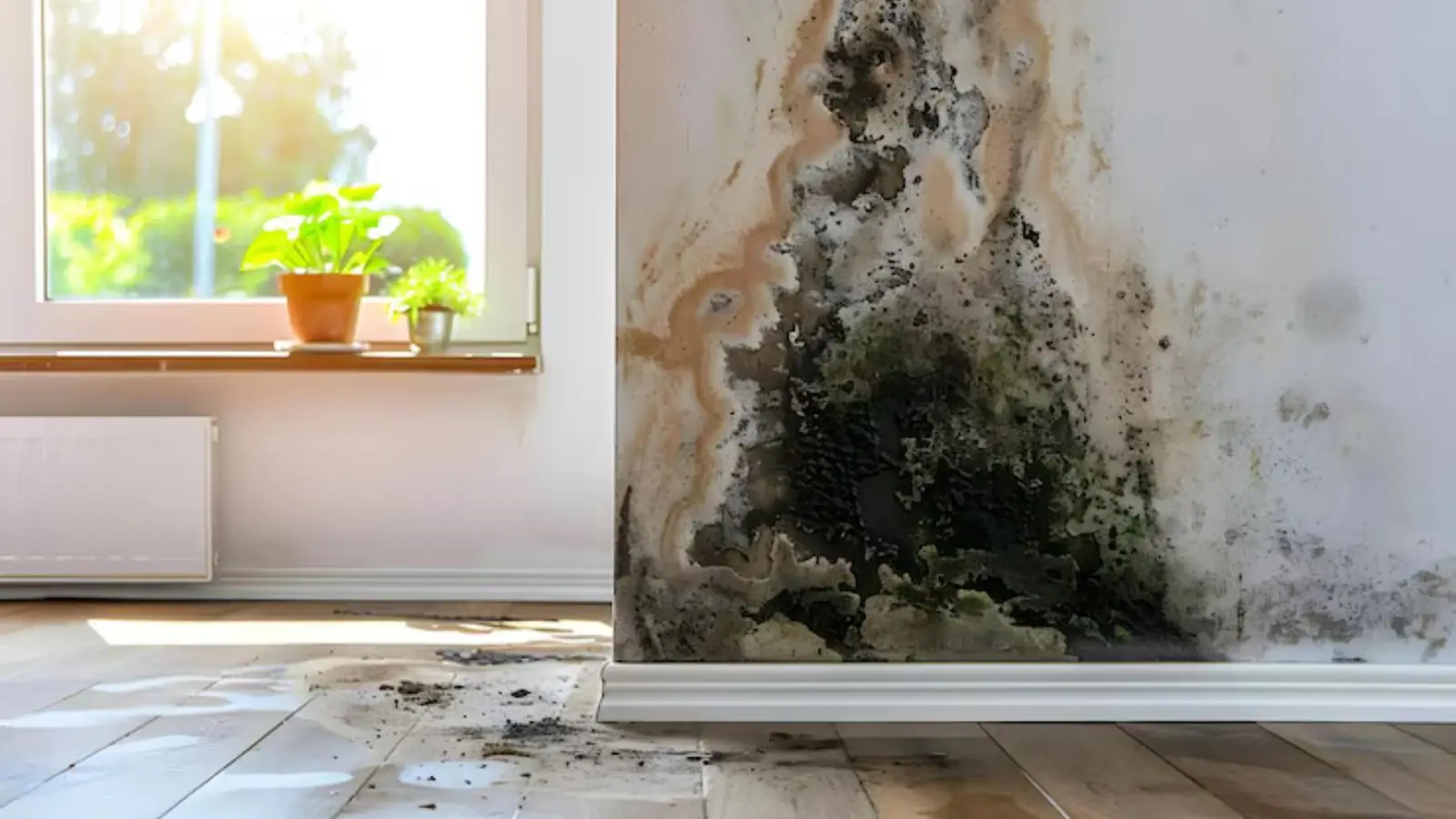
Mold and water damage go together because mold needs moisture to grow, and a leak supplies it. Drywall, carpet pad, framing and cabinet backs soak up water fast and release it slowly. The EPA's guide to mold and moisture says drying wet or damp materials within 24 to 48 hours of a leak or spill usually prevents mold growth. That is the clock this guide is built around.
If you are reading this with a wet floor or a stained ceiling in Temple City, the short version is simple. Stop the water, start drying, and check the places people forget. Below you will find how the process works, where growth tends to hide, what to do in the first two days, and where the honest limits sit. Questions about health belong with a physician, and questions about your house belong with an on-site assessment.
How a leak becomes a mold problem
Mold is a fungus that spreads through tiny airborne spores, and small amounts of those spores are already present indoors. What they lack is a reason to settle in. Add a food source such as paper-faced drywall, wood framing or household dust, then add moisture that stays put, and growth becomes possible. Take the moisture away and the process stalls.
That is why a one-time spill on a tile floor is a different story from a slow leak behind a vanity. Surface water on hard flooring can be wiped and dried in an afternoon. Water that wicks into the bottom of a wall or the back of a cabinet stays hidden, and hidden moisture is what keeps a problem alive for weeks.
The 24 to 48 hour window
The EPA figure is a guideline, not a stopwatch. It tells you that speed matters and that waiting several days stacks the odds against you. A few things shift the real timeline in your house.
- Material: carpet pad, insulation and unfinished wood hold water longer than sealed tile or glass.
- Water source: a clean supply line leak is a lesser concern than water that has sat for days or carried contamination.
- Airflow and temperature: still, warm, humid rooms dry slowly.
- Hidden layers: water under flooring or inside a wall cavity can stay wet while the surface feels dry.
Surface dryness is not proof of dryness. A moisture meter reads the moisture content inside drywall, wood and subfloor, and a thermal imaging camera shows cool, wet areas behind finished surfaces. Those readings, not touch, tell you when drying is done.
Professional drying uses air movers, LGR dehumidifiers and sometimes small inspection openings, all part of professional water mitigation. If you cannot get readings, assume the inside is wetter than it feels.
Water in the house right now? Our dispatch line is open 24/7.
☎ Call (626) 879-0276Where mold hides after a leak
Visible patches are the easy cases. The harder ones sit in spots where air does not move and nobody looks. After a leak, check these first.
- Closets that share a wall with a bathroom, kitchen or exterior wall, where stored boxes and clothes press moisture against the drywall.
- Bathroom ceilings, especially under an upstairs fixture or above a shower with weak ventilation.
- Behind furniture pushed against walls, where a sofa or bed frame blocks airflow and slows drying.
- Under carpet and pad, where the backing keeps water in contact with the subfloor.
- Inside cabinets under sinks, on the back panel and the cabinet floor.
- Around air conditioner condensate lines, drip pans and window sills after a roof or window leak.
Look for stains, bubbled or soft paint, a musty smell, warped baseboards and carpet edges that feel damp. A smell with no visible source is a reason for a moisture inspection, not for guessing.
Color tells you little. Many growths and stains look alike, and only proper sampling by a qualified party can identify what something actually is.
What to do in the first two days
Work in this order. The early steps cost nothing and make every later step easier.
- Stop the source. Close the fixture shutoff or the main water valve, and have the leak repaired or isolated before drying starts.
- Take photos and video of the damage before you move anything. Your insurer will want them.
- Remove standing water with towels or a wet vacuum, and lift rugs, boxes and stored items off wet floors, then photograph and discard porous items that sat wet.
- Pull furniture away from wet walls and open closet and cabinet doors so air can reach the surfaces.
- Run fans, open windows when outdoor air is drier than indoor air, and use a dehumidifier if you own one.
- Cut power to wet areas only if you can reach the panel while standing dry. If water has reached outlets or the panel, stay out and call the utility or 911 first.
Call a restoration company early if more than a small area is wet, if a ceiling sags, or if the water came from a drain or sewage line. Ask whether crews work to ANSI/IICRC S500, and ask for moisture readings and a written scope before work begins.
Water damage and mold: what gets dried and what gets removed
Not every wet material has to go. The answer depends on how long it stayed wet, how clean the water was, and whether growth has started. This table shows the usual pattern, not a rule for your specific house.
| Material | Often dried in place | Often removed |
|---|---|---|
| Drywall | Clean water, caught quickly, still firm | Soaked for days, crumbling, or showing growth |
| Carpet and pad | Carpet from a clean source, dried and cleaned | Pad in most cases, and carpet from contaminated water |
| Insulation | Rarely | Wet batts in walls and attics |
| Wood framing | Usually, with drying and cleaning | Only if it is structurally damaged |
| Hardwood flooring | Caught early with drying mats | Heavy cupping or long exposure |
Drying does not fix the plumbing, and it does not reverse rot. A plumber stops the leak, then restoration dries and repairs. Once growth is present, the work shifts toward mold remediation, which follows the ANSI/IICRC S520 standard with containment and HEPA filtration.
When to stop DIY and get help
EPA guidance says mold areas of about 10 square feet or less can generally be handled by the homeowner, and larger areas call for professional guidance. Treat that as a rough ceiling, and remember that a small visible patch can sit on top of a larger wet area you cannot see.
Get help sooner if the moisture source is unclear, if the damp area keeps coming back after you dry it, or if wet drywall is behind tile or cabinets. If you are unsure what you are looking at, call (626) 879-0276 and describe what you see. We will tell you honestly whether it sounds like a drying job, a cleanup job, or a plumber first.
Mold after water damage in Temple City homes
Walter P. Temple laid out the town in 1923 around Las Tunas Drive, so houses on the original townsite grid can carry decades-old supply lines, shutoffs and wall finishes. That is a reason to ask any inspector to open and check the connections under sinks and behind toilets, since old fittings are a common source of slow, hidden moisture.
Not every address gets water from the same supplier. Golden State Water's San Gabriel service area covers portions of Temple City, so check your water bill before you call about a meter or street-side shutoff. Knowing who serves you saves time when the leak is outside your walls.
If your home sits near the city edge, our pages on water damage restoration in San Gabriel and leak and mold help in El Monte cover the neighboring areas, which matters when you want to confirm a crew serves your side of the line.
Frequently asked questions
The EPA says drying wet or damp materials within 24 to 48 hours of a leak or spill usually prevents mold growth. Beyond that, the risk rises the longer materials stay wet. Actual timing depends on the material, the temperature and how much air moves through the space.
It can if the inside of the wall is still wet. A dry surface does not prove a dry cavity. A moisture meter and a thermal imaging camera show what the wall holds, and that is how a restoration crew decides whether to dry in place or open the wall.
No. Mold needs moisture, and a leak that is stopped and fully dried quickly often does not lead to growth. The risk climbs when water sits in porous materials, in closed spaces, or in rooms with little ventilation. No one can promise a given house will stay clear, which is why drying to verified readings matters.
A kit cannot tell you how much moisture is inside your walls, and it does not replace a proper assessment. If you want sampling, ask a qualified party for it, and if remediation follows, ask whether the work follows ANSI/IICRC S520. Health concerns should go to your physician.
Check the supplier name on your water bill. Golden State Water's San Gabriel service area covers portions of Temple City, but not every address. For a leak inside the house, close the fixture valve or the main valve at the house first, then call your supplier about anything outside.
Questions about your home? Talk to the 24/7 dispatch line.
☎ Call (626) 879-0276