
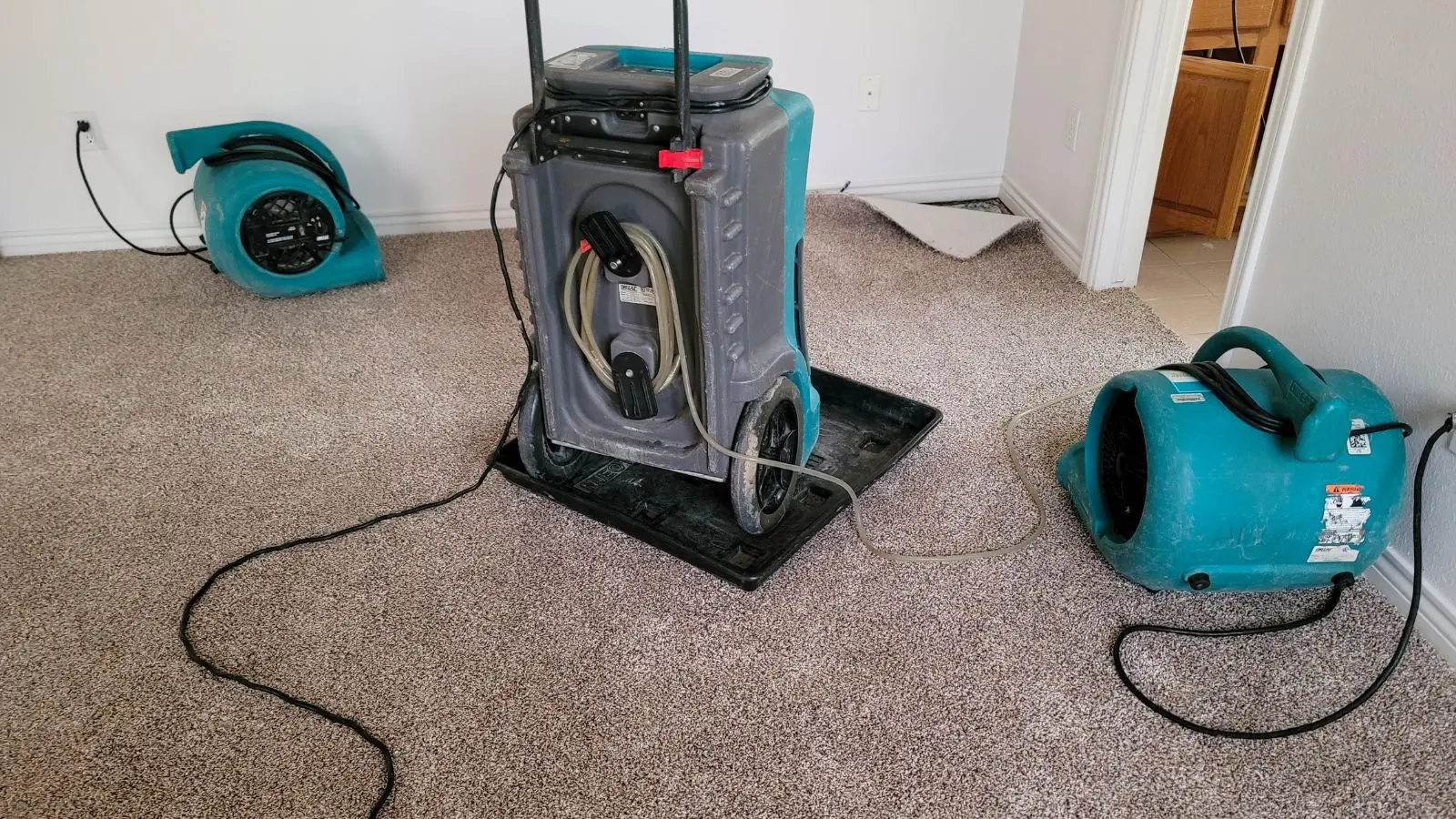
The honest answer is often several days, but it depends. A small clean-water spill on a single floor can dry quicker than a Category 3 event in a house with wet insulation. Anyone who quotes you a fixed number before measuring is guessing.
What matters more than a number is how the job ends. Professional drying finishes when moisture readings in the affected materials meet the dry standard, not when a certain day arrives. This guide explains what controls the timeline, what different materials do, and how to spot a job that has stalled.
What decides how long drying takes
No single factor sets the schedule. Several work together, and a change in one can add or remove days.
- Material: dense or porous materials hold water differently, and some release it very slowly.
- Water category: ANSI/IICRC S500 sorts water into Category 1 (clean source), Category 2 (significant contamination) and Category 3 (grossly contaminated, such as sewage or floodwater). Higher categories often mean removing porous materials instead of drying them.
- Damage class: S500 also sorts damage into Classes 1 to 4 by how much material is wet.
- Humidity and temperature inside the home, which control how quickly water evaporates.
- Time before drying starts, since water keeps soaking into materials the longer it sits.
- Equipment: how many air movers and LGR dehumidifiers are set, and where.
Because these overlap, two jobs that look alike can finish days apart. Ask for a drying plan based on your readings, not on a template.
A typical professional job runs for several days with equipment on site, and larger or deeper losses take longer. That range is why a good company talks about target readings and a monitoring routine instead of a promised finish date. If you hear a firm date before anyone has measured anything, ask what it is based on.
Material by material: what to expect
Different materials behave very differently once wet. This table describes behavior in general terms, not promises, since every material and loss is different.
| Material | Drying behavior | Typical outcome |
|---|---|---|
| Drywall | Absorbs water and wicks it upward. Dries in place when clean and caught early. | Often dried if the source was clean water, removed if soaked or contaminated |
| Carpet pad | Dense foam holds a lot of water and dries slowly. | Usually replaced, while the carpet above may sometimes be dried and reinstalled |
| Hardwood flooring | Releases moisture slowly and may cup or crown as it dries. | Often dried with specialty equipment, with some boards needing replacement or refinishing |
| Concrete slab | Very slow to release moisture, which can linger below the surface. | Dried and tested before flooring is installed over it |
| Insulation | Batts hold water and lose their value when wet. | Usually removed and replaced |
| Wood framing | Dries more slowly than surface finishes. | Monitored with moisture meters until readings meet the dry standard |
The slowest material in the room often sets the finish line. A wall can look dry by day two while the framing behind it is still wet.
Water in the house right now? Our dispatch line is open 24/7.
☎ Call (626) 879-0276Why hardware store fans are not enough
Box fans move air. They don't remove moisture from it. Evaporated water goes into the room's air and, without a dehumidifier to pull it out, that humid air settles back onto cool surfaces and into other materials.
A professional setup pairs air movers with LGR dehumidifiers, so water leaves the structure and then leaves the air. It also adds moisture meters and thermal imaging cameras to see inside walls and under floors. Without readings you can't tell whether something is drying or just feels dry. Our water mitigation page covers the full setup.
There is also a cost to guessing. Running box fans for a week can leave wall cavities and subfloors wet while the surface feels fine. That hidden moisture is where cupped floors, peeling paint and mold begin. Renting a single dehumidifier helps with humidity but still can't tell you where the water went or whether it left.
What daily monitoring looks like
Drying isn't set and forget. A technician returns each day, and each visit follows a similar pattern.
- Take moisture readings in the same spots as the day before and compare them.
- Check room temperature and humidity.
- Move or add air movers to reach wet spots that aren't improving.
- Remove equipment from areas that have reached the dry standard.
- Record everything, which also serves your insurance documentation.
The job ends when the affected materials meet the dry standard, compared against an unaffected area of the same material. That is the sign to stop the equipment, not the end of a billing window.
Signs that drying has stalled
Most jobs follow a steady downward trend. A flat line is a signal to investigate, not to wait it out.
- Readings that stay level for a full day or more
- Room humidity that isn't falling while dehumidifiers run
- A musty smell that grows rather than fades
- Flooring that continues to cup or lift
- Condensation on windows or cool walls
- A technician who doesn't take readings or can't show you the log
Common causes include a hidden wet pocket, too little dehumidification or a closed-off wall cavity. Ask for a reassessment. Mold needs moisture, and the EPA says drying within 24 to 48 hours usually prevents mold growth, so lingering moisture deserves attention. If mold appears, see our mold remediation page.
When it is safe to rebuild
Put flooring, drywall and paint back only after the final readings show dry. Closing up a wet wall traps moisture, and installing flooring over a damp slab can cause adhesive failure and buckling later.
Ask your restoration company for the final readings in writing before your contractor starts. That small step prevents a lot of rework. For rebuilding in a neighboring area, our pages on water damage restoration in San Marino and water damage restoration in El Monte describe how the same dry standard applies there.
Drying Timelines for Temple City Homes
LA County's consumer affairs guidance says a written contract should state the timeline, along with the total price, payment schedule and scope of work. For Temple City homeowners, that means asking how the timeline is defined. Ask whether the job ends when readings meet the dry standard, and what happens to the price and schedule if drying runs longer than expected.
The San Gabriel Valley sits at the base of the San Gabriel Mountains, but we won't quote local weather as a drying forecast. Indoor humidity and temperature in your own house are what count, and a contractor controls them with closed rooms and dehumidifiers. Ask for daily readings from inside your home, and verify any contractor's license at cslb.ca.gov before signing.
Frequently asked questions
Carpet can dry in days when the water was clean and extraction began quickly, but the pad underneath holds water longer and is often replaced. Contaminated water changes the answer. Daily moisture readings tell you more than any estimate.
Outdoor conditions matter less than what's happening inside your house. A crew controls indoor humidity and temperature with dehumidifiers and closed rooms. Ask how they will manage conditions rather than expecting a seasonal rule.
Drying only works while air movers and LGR dehumidifiers keep moisture leaving materials. Stopping early lets humidity rise again. Equipment typically stays until readings show the dry standard has been met.
Ask your restoration crew. Some setups need the HVAC system on, and others need a room sealed off. Following their plan keeps conditions consistent, which is what drying depends on.
Ask for final moisture readings in writing that show the affected materials at the dry standard, compared against an unaffected area. A surface that feels dry isn't proof. Equipment should come out only once the numbers confirm it.
Questions about your home? Talk to the 24/7 dispatch line.
☎ Call (626) 879-0276