
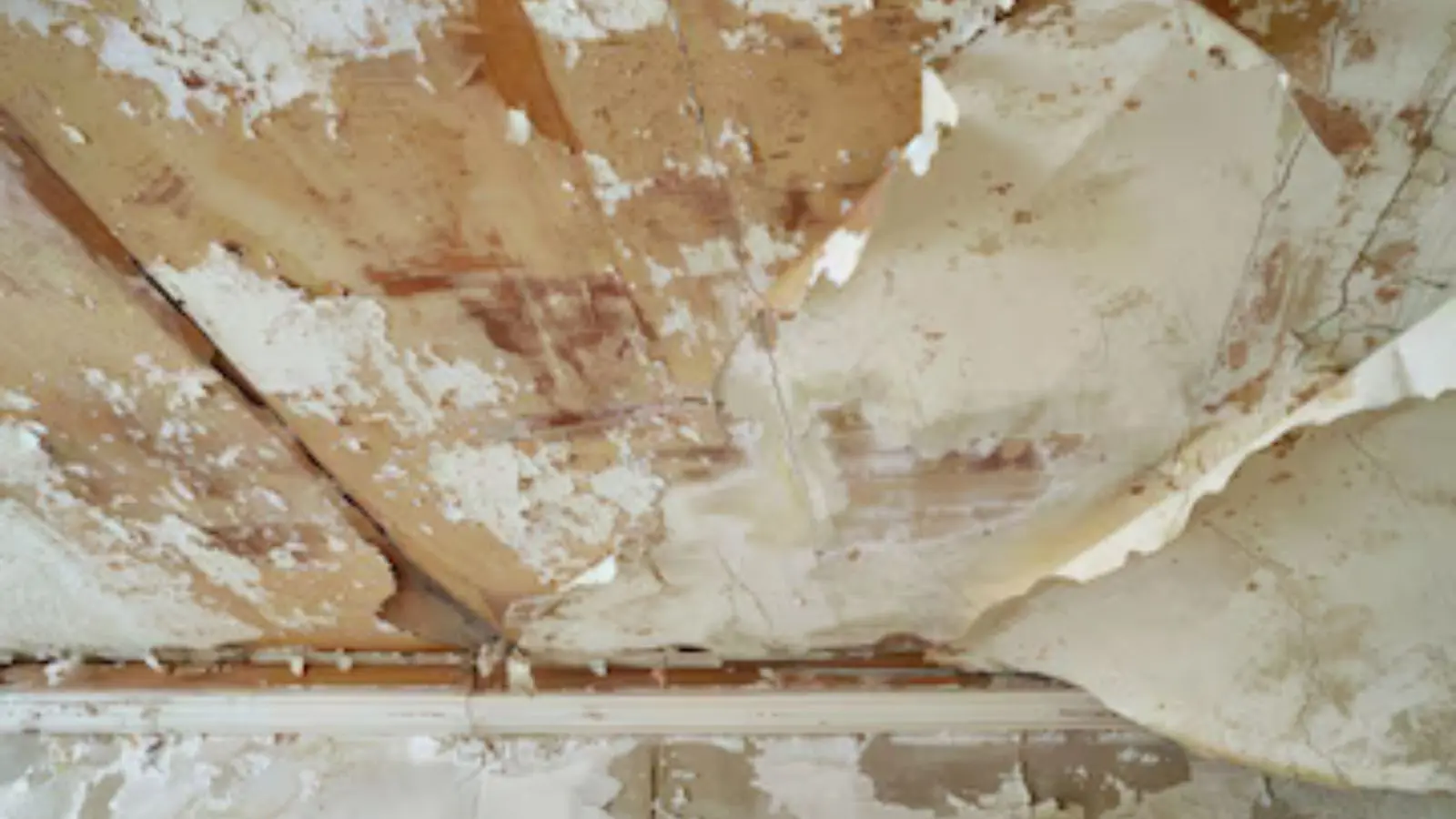
A wet ceiling puts you in a hurry, and hurry is when homeowners sign the first piece of paper put in front of them. The company you pick will decide whether the area is dried properly, whether the repair matches your ceiling, and whether the paperwork protects you.
This guide gives you the questions to ask ceiling water damage repair services and what a written contract should contain under Los Angeles County consumer guidance. It also covers the red flags worth walking away from and a simple method for comparing two quotes without a single price on the page.
Know which job you are hiring for
Ceiling water damage has two parts, and some companies only do one. Mitigation stops the damage and dries the structure. Repair rebuilds drywall, texture and paint. The county consumer guidance draws the same line, describing remediation as removing hazards and preventing further damage, and restoration as repairing and rebuilding.
Ask which phase the quote covers. A drying-only quote can look cheap and leave you with a bare ceiling. A repair-only quote can skip drying and hide moisture. Our water damage repair and water damage cleanup pages show how those phases fit together.
Questions to ask before anyone starts work
Put these questions to every company, on the phone and again in writing. A good one answers plainly and does not push you to sign on the spot.
- Is your company licensed by the California Contractors State License Board, and what is the license number? Verify it yourself at cslb.ca.gov.
- Can you send proof of general liability insurance, and do you carry workers' compensation? Check the CSLB site, because companies with no employees may be exempt.
- What is the written scope, room by room, including what comes out, what goes back and who handles paint and texture?
- How will you show the structure is dry, with readings from a moisture meter or a thermal imaging camera, and will I get a copy?
- Do your crews work to ANSI/IICRC S500, the published standard for water damage restoration? Ask how they sort the water category and the damage class.
- Who is on site, how long will the job take, and what happens if you find more damage once the ceiling is open?
Notice that none of these ask for a number first. Price makes sense only after you know exactly what it covers.
Water in the house right now? Our dispatch line is open 24/7.
☎ Call (626) 879-0276What a contract should say
Los Angeles County's Department of Consumer and Business Affairs lists what belongs in a written contract. If any item is missing, ask for it before you sign.
- The total price and the payment schedule.
- The scope of work, with terms for change orders when the scope grows.
- The timeline and any permits required.
- The contractor's CSLB license number.
- The cancellation policy.
Work worth $1,000 or more in labor or materials needs a licensed contractor in California. Read every line of a change order before signing it, since a change order is the usual way a small quote grows.
Deposits, cancellation and lien waivers
Money rules protect you most when you know them in advance. The county guidance says not to pay more than $1,000 or 10 percent of the contract price as a down payment, whichever is less. A company asking for a large cash deposit before it has done anything should explain why in writing.
Home improvement contracts generally carry a right to cancel within three business days, or five if you are 65 or older, and seven business days if your home was damaged in a major disaster. That right does not apply to contracts negotiated at the contractor's place of business, so know where you are signing. Request a lien waiver with every payment, and do not make the final payment until the work is finished and you hold lien releases.
Red flags that should slow you down
Most bad outcomes show up early. Treat these as reasons to pause and call someone else.
- Pressure to sign today, or a price that changes when you hesitate.
- No license number, or a number that does not check out at cslb.ca.gov.
- A quote that says only "fix ceiling" with no scope detail.
- No mention of drying, readings or when the structure will be dry.
- A request for most of the money up front, or for cash only.
- Talk of insurance outcomes as a sure thing. Only your insurer decides coverage.
How to compare two quotes without comparing prices
When two quotes arrive, line them up by what they include before you look at the totals. A lower total often means a smaller scope.
| Compare | Quote A looks like | Quote B looks like |
|---|---|---|
| Drying plan | Names equipment, readings and a dry standard | Says "dry as needed" with no proof |
| Scope of rebuild | Lists drywall, tape, texture, primer and paint by room | Lists only "repair ceiling" |
| Water category | States the category and class used | Silent on contamination |
| Contract terms | License number, payment schedule, change orders, cancellation | Missing several items |
| Allowances | Names what is excluded, such as source repair | Excludes nothing, which usually means it is vague |
The stronger quote is the one that shows its work. If both are vague, ask each company to rewrite the scope, then decide. Our own approach is to explain scope and price before work starts, so call (626) 879-0276 and we will walk you through what a typical job on your ceiling involves.
Insurance basics to keep in mind
Sudden and accidental water damage is often covered by homeowners policies, while gradual leaks and neglect often are not, and flood is usually excluded and needs separate flood coverage. Check your policy and ask your insurer before work begins. Photos, moisture readings and a written scope all help a claim, so ask each company what documentation it provides.
Hiring a ceiling repair company in Temple City
Our office is at 9123 Las Tunas Drive in Temple City, and that matters for one specific reason in the paperwork. The county says the three business day cancellation right does not apply to contracts negotiated at the contractor's place of business. If you negotiate any contract in a company's office, whether ours or anyone else's, read the terms in full before you sign, because you may not get a cooling-off period afterward.
Homeowners in El Monte, about 4 miles southeast of Temple City, can read how we approach jobs on our El Monte water damage restoration page. Neighbors in Arcadia, roughly 2 miles northeast, can see our Arcadia ceiling and leak work and use the same questions above when comparing companies.
Frequently asked questions
Search the contractor's license number at cslb.ca.gov. Confirm the license is active, the name matches your contract and the classification fits the work. Common restoration classes include B (General Building), C-21 (Demolition) and C-61 (Limited Specialty).
The county consumer guidance says not to pay more than $1,000 or 10 percent of the contract price as a down payment, whichever is less. Ask for the payment schedule in writing and pay the rest in stages as work is completed.
A lien waiver is a signed document saying the contractor or supplier has been paid and gives up lien rights for that payment. Ask for one with every payment, and do not make final payment before you have lien releases and the work is complete.
It is the published standard for professional water damage restoration. It sorts water into three categories by contamination and damage into classes by how much material is wet. Ask any company whether its crews work to it and how it applies to your ceiling.
Not necessarily. The three business day cancellation right (five if you are 65 or older, seven if your home was damaged in a major disaster) does not apply to contracts negotiated at the contractor's place of business. Read the cancellation clause before signing anywhere.
Questions about your home? Talk to the 24/7 dispatch line.
☎ Call (626) 879-0276