
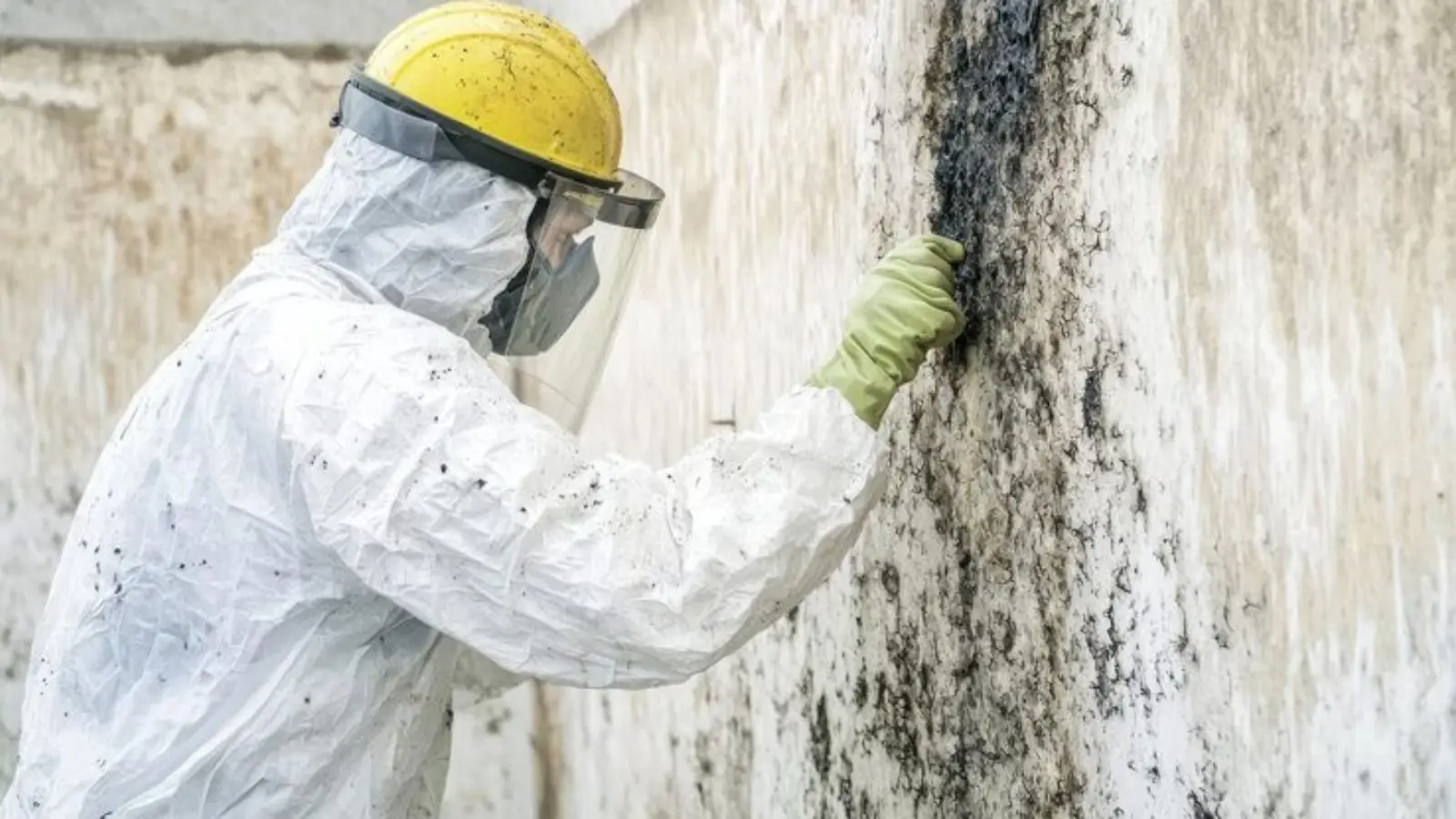
Search for black mold removal companies and you will find plenty of confident claims. Choosing well takes a few specific checks: what the company says it will do, how it will contain the work, whether its license is real, and who verifies the result. This guide gives you a checklist you can run in one phone call and one website visit.
It starts with the label itself. Black mold is a popular phrase, not a diagnosis, and treating it as one leads people to overpay or panic. Nothing here is medical advice, and health questions belong with a physician.
What black mold means, and what it does not
Black mold is a casual name for dark mold growth. Color does not identify a species. Many different molds appear dark, and some dark stains are not mold at all. Only sampling and laboratory analysis by a qualified party can say what a specific growth is.
For the homeowner, the practical point is simple. Mold of any color needs moisture, and the response follows the same logic. Find and fix the water, contain the affected area, remove what cannot be cleaned, and dry the structure. Be wary of any company that treats a dark patch as a special emergency and skips the moisture question.
A checklist for choosing a company
Run these checks before you accept a visit, a scope or a deposit.
- Written scope: it should list rooms, materials removed, cleaning methods, containment and disposal.
- S520 question: ask whether the crew works to ANSI/IICRC S520, the published standard for professional mold remediation.
- License: work worth the state's licensing threshold needs a contractor licensed by the Contractors State License Board. Most mold jobs cross that threshold, so verify the license at cslb.ca.gov.
- Insurance: ask for proof of general liability insurance, and check workers' compensation on the CSLB site.
- Containment plan: ask how they will keep spores out of the rest of the house, including barriers, negative air and HEPA filtration.
- Moisture plan: ask how they find the source, and how they confirm the structure is dry.
The common restoration license classes on the county's list are B (General Building), C-21 (Demolition) and C-61 (Limited Specialty). A class on its own does not mean the work is good, but a missing or mismatched class is a reason to ask more questions.
Water in the house right now? Our dispatch line is open 24/7.
☎ Call (626) 879-0276Questions to ask on the first call
Good answers are specific and calm. Weak answers are vague, rushed or built around fear. This table shows what to listen for.
| Question | A good answer sounds like | A red flag sounds like |
|---|---|---|
| How will you contain the work? | Plastic barriers, negative air machine, HEPA filtration, a plan for the HVAC | Just spray it and it is gone |
| What standard do you follow? | ANSI/IICRC S520 for remediation, plus EPA and Cal/OSHA rules for removal and disposal | A proprietary method with no standard named |
| How do you handle the moisture? | Moisture meter readings, a thermal imaging camera, and a fix for the source | No mention of water or the leak |
| Who tests the result? | An independent party, if you want it | We will test ourselves and tell you it is clear |
| Can I see your license and insurance? | A CSLB number and proof of liability insurance | Hesitation, or a number that does not check out |
You do not need to be an expert. You only need to notice whether the answers come with details.
Red flags to walk away from
Pressure and vagueness are the two patterns to watch. A company confident in its work does not need either.
- A diagnosis or health prediction based on color or smell. That is outside what a contractor can know.
- A promise that mold will never return. Mold needs moisture, and no company controls your future leaks.
- A request for a large deposit up front. The county guide caps a down payment at the lesser of a fixed dollar limit or 10 percent of the contract price.
- No written contract, or a contract with no CSLB license number.
- A price offered before anyone has seen the space, or a scope that changes as soon as you hesitate.
- A company that tests and certifies its own work as the only proof.
Testing, clearance and independence
Many homeowners, especially those selling or refinancing, want a document showing the work is complete. That is clearance testing, and it carries the most weight when done by a party with no stake in the cleanup. Ask the contractor whether they support an independent tester's access and schedule.
Testing before work can also help define scope, but it is optional and separate from remediation. If you are weighing the work itself, see our mold remediation service for how containment and removal are handled. If drying is the main issue, the water mitigation steps we use are laid out there too.
Contract and payment protections
The LA County Department of Consumer and Business Affairs publishes the rules worth knowing. A written contract should state the total price, payment schedule, scope, change-order terms, timeline, permits, the contractor's CSLB license number and the cancellation policy.
Use lien waivers with every payment, and do not make the final payment until work is complete and you have lien releases. A home improvement contract can generally be cancelled within three business days, five if you are 65 or older, and seven if your home was damaged in a major disaster. Call (626) 879-0276 if you want us to walk through our scope the same way.
Choosing a mold company near Temple City
Temple City covers about 4 square miles, and neighbors including Arcadia, San Gabriel, San Marino and Rosemead sit close by. That means many companies list the city as a service area without having a crew nearby. Ask where the crew is dispatched from and where the business is based, and compare that with the address on the contract.
Any company worth hiring can give you a street address you can confirm. Ours is 9123 Las Tunas Dr in Temple City, and we take requests by phone. If your home is closer to a neighboring area, our pages for water damage restoration in El Monte and water damage restoration in San Marino describe those service areas.
Frequently asked questions
That is a health question, and it belongs with a physician. Color does not identify a species, and only testing by a qualified party can say what a growth is. For the house, the response is the same for any mold: fix the moisture, contain, remove what cannot be cleaned, and dry.
No. Many molds look dark, and some stains look like mold but are not. Sampling and laboratory analysis by a qualified party are the way to identify a growth. A contractor who names a species by sight is guessing.
Go to cslb.ca.gov and search the license number from the contract. The county guide says work worth the state's licensing threshold needs a CSLB-licensed contractor, and most mold jobs cross it. Also ask for proof of general liability insurance.
Many owners do, especially for a home sale or a loan. An independent tester has no stake in the remediation, so the result carries more weight. Ask your contractor to make the site available and to follow ANSI/IICRC S520 practice.
Our business address is 9123 Las Tunas Dr, Temple City, CA 91780. We take requests by phone, so call first to describe your situation. Any company you consider should be able to give you a confirmable street address too.
Questions about your home? Talk to the 24/7 dispatch line.
☎ Call (626) 879-0276